Diamond Necklace Guide: Styles, Quality, Metals, and Care

Choosing fine jewelry should feel exciting, not confusing. A diamond necklace can mark a personal milestone, become a thoughtful gift, or add a refined finishing touch to everyday outfits. With so many designs, diamond grades, metals, and chain lengths on offer, understanding the details helps you see what makes each necklace different.
Some people prefer a simple solitaire pendant that works with almost any outfit. Others are drawn to a diamond tennis necklace, a halo design, or a distinctive statement piece. Each style has its own character, and the right choice depends on taste, comfort, and how you plan to wear it.
A diamond necklace combines the beauty of gemstones with the craftsmanship of fine jewelry. Its look depends on the diamond’s characteristics, the setting, the chain, and the metal. This guide covers popular diamond necklace styles, the 4Cs of diamond quality, natural versus lab grown diamonds, metal options, construction, styling ideas, and practical care.
What Is a Diamond Necklace?
A diamond necklace is a piece of jewelry featuring one or more diamonds attached to a chain or built into a decorative arrangement. Some designs have a single diamond pendant, while others use several stones in patterns or set continuously around the neck.
The simplest designs, such as a single diamond necklace, put one central stone in focus. More elaborate pieces may use many diamonds, intricate metalwork, or repeating geometric patterns. The overall look depends on the shape and characteristics of the stones, the setting, and the proportions of the finished piece.
Diamond necklaces suit casual clothing, professional outfits, and formal attire. They are also linked to anniversaries, birthdays, personal achievements, and meaningful gifts. A diamond necklace for women is one of the most popular jewelry gifts, and a diamond necklace for her can range from an understated pendant to an elaborate arrangement of stones. Men’s styles are growing too, with a men’s diamond necklace or men’s diamond chain often featuring a bolder chain and a simple pendant.
Popular Diamond Necklace Styles
Diamond necklaces come in many styles, each balancing simplicity, sparkle, and detail differently. Knowing the defining features explains why some designs suit certain occasions or tastes.
Solitaire diamond necklaces
A diamond solitaire necklace features one principal diamond suspended from a chain. The straightforward design directs attention to the stone instead of surrounding decoration. A solitaire necklace, also searched as a solitaire pendant necklace or diamond solitaire pendant, works with many clothing styles. A small pendant looks right with everyday outfits, while a larger stone gives more emphasis for evening wear. A 1 carat diamond necklace solitaire is a popular milestone choice, and a 1/2 carat diamond necklace is a more modest option that still shows real sparkle. For a bolder statement, many buyers look at a 2 carat diamond necklace.
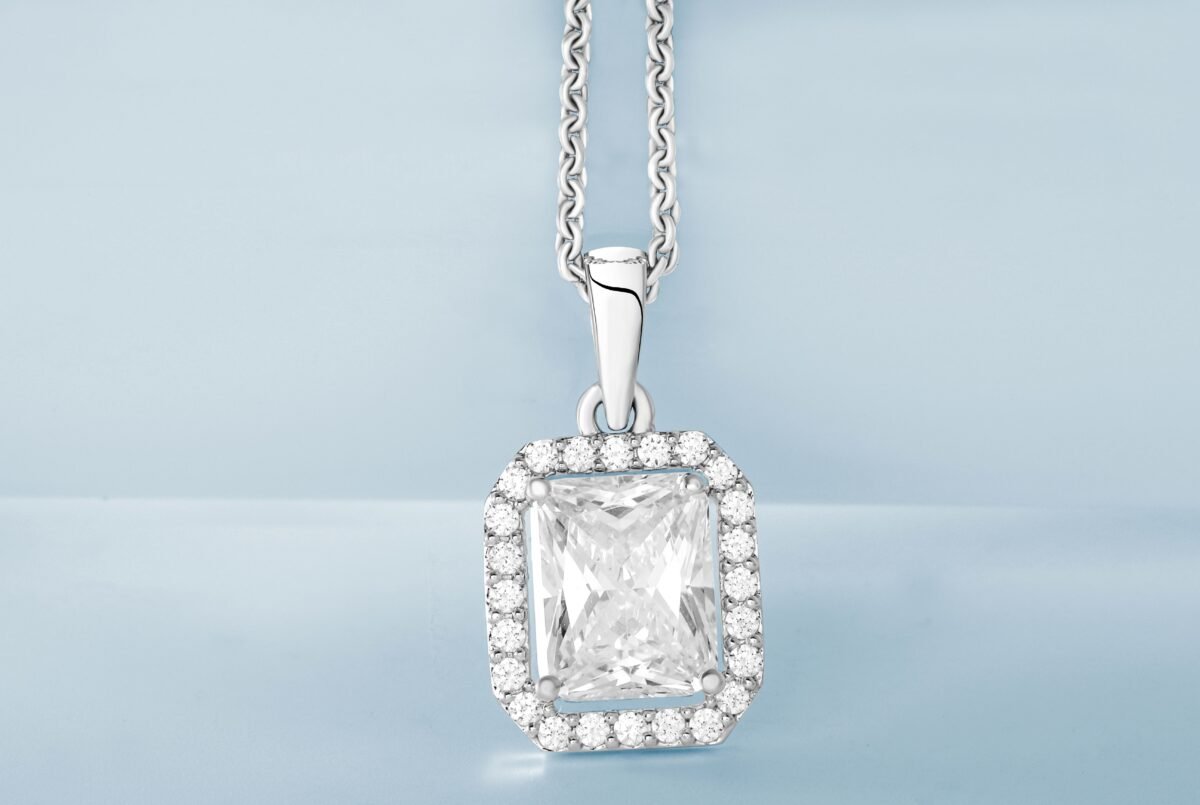
The setting changes the pendant’s look. Prong settings hold the diamond with small metal claws and leave much of the stone visible. Bezel settings wrap the edge in metal for a smoother outline. A diamond bezel necklace, or bezel set diamond necklace, is a good choice if you want a sleek, secure style for daily wear. Solitaire designs can be delicate, modern, traditional, or bold, depending on the diamond’s shape, the metal, and the pendant’s proportions.
Floating and stud-style necklaces
A floating diamond necklace has one or more stones that appear to sit directly on the chain with minimal metal around them. This creates a light, modern effect. A diamond stud necklace works in a similar way, using stud-style settings. Both suit wearers who prefer delicate, minimal jewelry.
Halo diamond necklaces
A halo diamond necklace features a central diamond surrounded by smaller stones. The border adds sparkle and can make the center stone look larger than it would in a plain setting. This style appeals to people who enjoy extra shine and a more detailed design. The halo can be round, oval, square, or another shape, depending on the central diamond. Because a halo necklace contains many stones, the setting needs attention. Small diamonds should be held securely, and the piece should be cleaned following the jeweler’s advice.
Diamond tennis necklaces
A diamond tennis necklace has a continuous line of diamonds around the neck, joined by flexible settings. A diamond tennis necklace womens buyers often choose can look understated or dramatic depending on stone size, necklace length, and spacing. A graduated tennis necklace uses stones that grow larger toward the center, which adds depth and a more dramatic focal point. Some shoppers search for a tennis bracelet necklace, meaning a longer tennis-style chain that can be worn in different ways. A diamond strand necklace or diamond eternity necklace follows a similar idea, with diamonds spaced evenly along a continuous line.
Construction matters for these designs. The many settings and connecting links need to remain secure, and the clasp should close reliably. Periodic professional inspection can reveal loose stones or signs of wear.
Three-stone and multi-stone necklaces

A three diamond necklace, also called a 3 stone diamond necklace or three-stone necklace, has three principal diamonds in a balanced arrangement. The stones may be similar in size, or a larger center diamond may be flanked by smaller ones. Some people link the three stones to past, present, and future, which makes the design popular for anniversaries. A 5 diamond necklace follows the same idea with a longer row.
Multi-stone and cluster necklaces arrange several diamonds in patterns, clusters, or graduated designs. A diamond pendant set often pairs a matching pendant with earrings, and a diamond necklace and earring set offers a coordinated look for weddings and other special events. A diamond set can include a necklace, earrings, and sometimes a bracelet.
Pendant shapes and motifs
Diamond shapes and motifs give a necklace personality:
- Round diamond necklace: the classic brilliant shape, the most common choice.
- Pear and teardrop: a pear shaped diamond necklace or pear diamond necklace has a tapered point, and a teardrop diamond necklace or diamond drop necklace hangs with a graceful curve.
- Oval and marquise: an oval diamond necklace looks elongated and elegant, and a marquise diamond necklace is pointed at both ends.
- Baguette: a baguette diamond necklace uses rectangular stones for clean, geometric lines.
- Circle: a diamond circle necklace or diamond circle pendant has a simple, symbolic form.
- Bar: a diamond bar necklace is a modern, minimalist option.
- Star and butterfly: a diamond star necklace or diamond butterfly necklace adds a playful note.
- Cross: a diamond cross necklace, diamond cross pendant, or diamond cross necklace womens version is a popular choice for faith or style. Small diamond cross necklace designs are especially popular for everyday wear, while a gold diamond cross necklace or white gold diamond cross necklace adds extra warmth or brightness.
- Pave: a pave diamond necklace places small diamonds close together for continuous sparkle.
Personalized and heart-shaped pendants are also common. They emphasize the design as much as the diamonds. Custom designs may have different exchange or alteration terms, so understand them in advance.
Dainty and simple necklaces
A simple diamond necklace, dainty diamond necklace, small diamond necklace, or tiny diamond necklace works well for daily wear. These are often layered with other chains. A diamond choker sits close to the neck and creates a more formal look.
Comparing necklace styles
| Style | Main characteristic | Common appeal |
| Solitaire | One central diamond | Simple and versatile |
| Halo | Central diamond surrounded by smaller stones | Decorative sparkle |
| Tennis | Continuous line of diamonds | Balanced, luminous appearance |
| Three-stone | Three principal diamonds | Symmetry and symbolism |
| Cluster | Several diamonds arranged together | Detailed visual patterns |
| Geometric or personalized | Distinctive shapes or custom details | Individual expression |
No style is universally best. The appeal depends on taste, the occasion, and the balance between the diamond, setting, chain, and clothing.
Understanding Diamond Quality: The 4Cs
Diamond quality is commonly described through four characteristics: cut, color, clarity, and carat weight. These are the 4Cs, explained in educational resources from the Gemological Institute of America (GIA). They give a useful framework, but they do not fully decide how attractive a finished necklace looks. The setting, proportions, lighting, and personal preference all matter.
Cut and light performance
Cut describes how a diamond’s proportions, symmetry, and finish affect its interaction with light. It differs from shape. Round, oval, pear, and emerald describe shapes, while cut describes how effectively the stone reflects and returns light. A well-cut diamond shows lively brightness. A stone with less favorable proportions may look duller even at a high carat weight.
For round brilliant diamonds, some grading systems provide an overall cut grade. Fancy shapes are assessed differently, and a comparable overall cut grade may not exist for every shape or system. Lighting also changes appearance: store lighting emphasizes sparkle, while ordinary indoor light shows another character, so view a diamond in more than one setting.
Color and appearance
For traditional white diamonds, the GIA D-to-Z scale runs from D, which is colorless, toward grades with more noticeable color. Differences between neighboring grades can be subtle, especially once the diamond is set in a necklace. The surrounding metal also affects the impression: yellow gold creates a warm contrast, while white gold and platinum give a cooler look.
Color preference is personal. Some people want a bright, colorless look, while others are happy with a slightly warmer tone. A yellow diamond necklace is a different category: those stones have deliberate color and are valued for it. The key is to understand what a grade means instead of assuming the highest grade will always look dramatically different.
Clarity and natural characteristics
Clarity covers internal characteristics, called inclusions, and external characteristics, called blemishes. Many diamonds contain tiny features that are hard to see without magnification. A higher clarity grade generally means fewer or less noticeable characteristics under grading conditions, but a lower grade does not automatically mean visible flaws.
The location and type of an inclusion can matter as much as the grade. Some have little visible effect, while others may influence appearance or, in rare cases, durability. For a real diamond necklace, ask whether inclusions are visible without magnification and how they affect the stone’s look. A qualified professional can explain how the grading information relates to the individual diamond.
Carat weight and visible size
Carat measures weight, not visible size. Two diamonds of the same carat weight can look different because of shape, depth, proportions, and setting. A diamond that spreads across a wider surface may look larger from above than a deeper stone of the same weight, and a halo can make a center stone seem more substantial. How a necklace looks when worn also depends on pendant dimensions, chain length, and the wearer’s proportions.
How the 4Cs work together
The 4Cs should be read as a group, not as four separate scores. Someone who values sparkle may care most about cut, while another person may prioritize size or a certain shape. A grading report describes the diamond’s characteristics, but it does not decide whether a complete necklace suits your taste or offers fair value at a given diamond necklace price. Viewing the finished piece and understanding its construction remain essential.
Natural and Lab-Grown Diamonds
Natural and lab grown diamonds share the same essential crystal structure and are both crystallized carbon. The main difference is how they form. Natural diamonds develop through geological processes over long periods, while lab-grown diamonds are produced using technology that recreates the conditions needed for growth. Both can be used in fine jewelry, and both show the optical properties of diamond.
Natural diamonds
Natural diamonds form beneath the Earth’s surface under high pressure and temperature, and geological processes eventually bring some closer to the surface where they can be recovered. Some people value them for their geological origin and traditional associations, but natural origin alone does not decide quality, beauty, or value. Natural diamonds vary in size, color, clarity, and cut, and their market value depends on those characteristics, documentation, condition, and market circumstances.
Evaluate sourcing information carefully. If a particular origin or ethical claim matters to you, ask what documentation supports it instead of relying on broad marketing statements.
Lab-grown diamonds
A lab grown diamond necklace, also called a lab diamond necklace or lab created diamond necklace, uses diamonds made through controlled technological processes. They are diamonds, not imitations such as cubic zirconia or glass, but they have a different origin from natural stones. A lab grown diamond pendant, lab diamond pendant, lab created diamond pendant, lab diamond chain, or lab grown diamond chain follows the same logic. These options can offer more choice in size, design, and budget.
Prices and resale prospects depend on market conditions and the specific stone. Lab-grown diamonds should not automatically be treated as investments or assumed to keep their purchase price. Clear identification matters, so descriptions should state when a diamond is lab-grown and provide documentation where available.
Understanding the differences
The choice between natural and lab-grown diamonds reflects personal priorities, including origin, design, budget, and expectations about resale. Neither is automatically better for every person. Compare individual stones, their grading information, and the whole necklace instead of relying on the category label. Environmental and social claims also need careful reading, because the impact of a diamond depends on specific production or sourcing circumstances.
Metals Used in Diamond Necklaces
The metal around a diamond affects its color, appearance, construction, and upkeep. Yellow gold, white gold, and platinum are the most common choices.
Yellow gold
A gold diamond necklace or gold and diamond necklace has a warm look that suits classic, vintage-inspired, and contemporary designs. A yellow gold diamond necklace creates a noticeable contrast with a white diamond, and a diamond pendant necklace gold style is a long-time favorite. Gold is described by karat, which shows the proportion of pure gold in the alloy: 18-karat gold contains more gold than 14-karat. Durability depends on the alloy, design, and construction, not just color or karat marking.
White gold
A white gold diamond necklace has a silvery appearance and is widely used in diamond jewelry, including a diamond pendant necklace white gold style. Many white gold pieces are coated with rhodium for a bright, reflective finish. The coating can wear over time, depending on the piece and how often it is worn, and professional renewal may be appropriate when the finish becomes uneven. White gold and platinum are different metals with different compositions and maintenance needs, so their similar appearance does not make them interchangeable.
Rose gold and silver
A rose gold diamond necklace has a soft pink tone that suits warmer skin tones and vintage-inspired designs. A silver diamond necklace is a more budget-friendly choice, though silver can tarnish and needs regular cleaning.
Platinum
A platinum necklace or platinum pendant is a precious metal piece known for its naturally white appearance. It suits people who prefer a white metal without relying on rhodium plating for color. Platinum can still develop surface marks through wear and needs appropriate care. Its cost relative to gold varies with market prices, the amount of metal used, and craftsmanship.
The best metal depends on personal preference, budget, design, and how willing you are to maintain the jewelry.
Gemstone accents
Colored gemstones add contrast to a diamond. A sapphire and diamond necklace or sapphire diamond necklace has a deep blue color that looks striking against white stones. An emerald and diamond necklace or emerald diamond necklace adds rich green, while a ruby and diamond necklace or ruby diamond necklace adds a bold red. A pearl and diamond necklace or pearl diamond necklace combines soft luster with sparkle. Each gemstone has its own care needs, so ask the jeweler how to clean a mixed-stone piece safely.
Diamond Settings and Necklace Construction
A setting holds the diamond in place and shapes how much of it is visible. The chain, pendant attachment, and clasp also affect comfort and reliability.
Prong settings use small metal claws to secure a diamond. They leave much of the stone exposed, emphasize its outline, and let light enter from several directions. Raised prongs can catch on delicate fabrics or loosen with wear, so check them regularly.
Bezel settings surround the diamond’s edge with a rim of metal. They give a smooth outline and help protect the stone’s perimeter, and they suit people who prefer a streamlined look. Depending on the design, the metal may cover part of the diamond’s edge.
Halo and pave settings use smaller stones around a center diamond or across part of the surface. They have many tiny settings, so cleaning methods must suit the whole piece, and loose stones should be examined by a qualified jeweler.
Chain length and pendant proportions
Chain length affects where a necklace sits on the chest. A shorter chain usually sits higher and a longer one lower, though actual placement depends on body proportions, pendant size, and clothing. A diamond chain necklace or diamond chain for women has stones set along the chain itself, while a real diamond chain is built to be worn alone. A pendant should hang naturally and not twist often. Its bail, the part that connects the pendant to the chain, should suit the chain’s thickness. A very delicate chain may not suit a heavier stone or daily wear.
Clasp quality
The clasp keeps the necklace fastened, so it should close properly and be easy to use. For a necklace of real value, understand the clasp design and whether repair or replacement is available. A beautiful pendant cannot make up for a chain or fastening that does not suit the piece.
The Meaning and Symbolism of Diamond Necklaces
A diamond necklace can carry personal meaning beyond its look. It may represent affection, commitment, achievement, remembrance, or a major life event.
Milestones and celebrations. Diamond necklaces are linked with anniversaries, birthdays, graduations, weddings, and other milestones. The meaning often comes from the occasion and the people involved, not from the stone alone. A simple pendant can mark a quiet personal achievement, while a more elaborate design can celebrate a major event.
Personal expression. A geometric pendant may reflect a love of modern design, while a personalized necklace may represent a family connection or a special date. Self-gifting is also meaningful, since a necklace can mark independence or professional progress.
Sentimental value. Over time, memories connected to a necklace may matter more than its original look or price. For that reason, choose a design that reflects the wearer’s taste instead of following trends alone.
Styling a Diamond Necklace for Different Occasions
A diamond necklace suits many outfits when its design, length, and proportions work with the clothing.
Everyday and professional clothing. A simple solitaire pendant or small geometric necklace suits shirts, blouses, and fine knitwear. These designs add subtle detail without dominating the outfit. Check chain length when you wear a necklace under a collar or near a high neckline, and consider a low-profile setting for frequent wear. Remove jewelry during activities that could expose it to impact, pulling, or damaging chemicals.
Formal clothing and evening wear. Halo pendants, multi-stone designs, and tennis necklaces give more emphasis on formal occasions. A short pendant suits an open neckline, while a longer one can work with a simple dress or a higher neckline. If the necklace is elaborate, simpler earrings may create balance, while a delicate pendant can work with more noticeable earrings.
Layering. Layering combines necklaces of different lengths. A small diamond pendant can be a focal point among plain chains or textured necklaces. Different lengths reduce overlap, though some chains may still tangle. Give each piece enough space to be seen, and make sure the combined weight is comfortable.
Coordinating metals and jewelry. Matching every metal is not essential. Yellow gold can sit beside white metals when the combination looks intentional. A substantial necklace may suit understated earrings, while a small pendant can be paired with a wider range of accessories. Treat styling advice as ideas, not strict rules.
Buying a Diamond Necklace: Practical Tips
Buying fine jewelry is easier when you know what to check.
- Set a budget first. The diamond necklace price depends on the diamond’s characteristics, the metal, the design, and the retailer. Searches for a diamond necklace sale are common, and sales can help, but still compare the quality details.
- Ask for documentation. For significant stones, ask for a grading report and confirm whether the diamond is natural or lab-grown.
- Compare several pieces. Look at the finished necklace in different light, and compare similar designs from different sellers, including well-known jewelry retailers such as Jared.
- Check construction. Look at the setting, chain, and clasp as well as the stone.
- Understand return and care policies. Ask about returns, resizing, repair, and inspection services before you buy.
- Match the necklace to the wearer. Notice what the person already wears. A real diamond pendant in a simple setting may suit someone who prefers minimal jewelry, while a halo or tennis necklace may suit someone who likes bold pieces.
Caring for a Diamond Necklace
Diamonds are hard, but a diamond necklace is not indestructible. A stone may chip if struck at a vulnerable angle, and the setting, chain, or clasp can wear or break. Good care keeps a necklace looking its best and can reveal problems early.
Gentle cleaning. For many necklaces, lukewarm water, a little mild dish soap, and a soft brush are suitable, but the correct method depends on the metal, setting, other gemstones, and any treatments. Necklaces with pearls, porous gemstones, glued components, or delicate antique construction may need different care. Avoid harsh chemicals and abrasive cleaners, and ask a qualified jeweler if you are unsure.
Safe storage. Keep the necklace in a soft pouch or lined jewelry box where it will not rub against other pieces. Diamonds can scratch other jewelry, and chains tangle when stored together. Close the clasp and lay the chain out carefully, and avoid pulling tight on knots.
Removing jewelry during certain activities. Remove a diamond necklace before swimming, exercising, showering, gardening, or doing household tasks that could catch or damage it. Chlorine, cleaning chemicals, impact, and pulling can affect the metal or leave residue. A chain that catches can also be a safety risk.
Professional inspections. A jeweler can inspect the setting, chain, and clasp for wear, which is especially useful for necklaces worn often or designs with many small diamonds. If a diamond moves, a prong looks damaged, or a clasp stops closing securely, stop wearing the necklace until it has been checked.
Common Misunderstandings About Diamond Necklaces
- A larger diamond is not always more attractive. Carat weight measures weight, not beauty. Cut, proportions, shape, and setting all affect how a diamond looks.
- The highest grade is not automatically necessary. Some differences are hard to notice without magnification, so look at the actual stone.
- Lab-grown diamonds are not imitations. They are diamonds with a different origin, unlike simulants such as cubic zirconia. Clear descriptions and documentation help tell the categories apart.
- Diamond jewelry is not maintenance-free. A diamond’s hardness does not protect the setting, chain, or clasp.
- Resale value is not guaranteed. It depends on the stones, metal, condition, design, market demand, and the terms of the sale. Do not assume a necklace will appreciate.
Frequently Asked Questions About Diamond Necklaces
What makes a diamond necklace different from other necklaces?
A diamond necklace features one or more diamonds as its main decorative element. Its look depends on the stones, setting, metal, chain, and overall design.
Which diamond necklace styles suit everyday wear?
Simple solitaire pendants, small diamond necklaces, and low-profile designs are practical for daily wear. Suitability depends on the setting, chain strength, pendant weight, and your activities.
What are the 4Cs of diamond quality?
The 4Cs are cut, color, clarity, and carat weight. Together they describe a diamond’s characteristics, although the finished necklace’s appearance also depends on its design and setting.
Are natural and lab-grown diamonds the same?
They share the same crystal structure and are both diamonds, but they form differently. Natural diamonds form through geological processes, while lab-grown diamonds are produced with technology.
Which metal is best for a diamond necklace?
Yellow gold, white gold, rose gold, and platinum are common choices. Each has a different look and maintenance profile, so the best option depends on your preferences and the design.
How much does a diamond necklace cost?
There is no single answer. The price depends on the diamond’s size and quality, whether it is natural or lab-grown, the metal, the design, and the seller. Compare several pieces, and ask what the price includes.
How often should a diamond necklace be inspected?
Check it if the diamond looks loose, the chain is damaged, or the clasp does not close securely. Periodic professional inspections are also useful for frequently worn jewelry and designs with many stones.
How should a diamond necklace be cleaned?
There is no single answer. The price depends on the diamond’s size and quality, whether it is natural or lab-grown, the metal, the design, and the seller. Compare several pieces, and ask what the price includes.
Final Thoughts on Diamond Necklaces
A diamond necklace brings together gemstone characteristics, metalwork, design, and personal meaning. Its appeal may come from a simple solitaire pendant, the continuous sparkle of a tennis necklace, the detail of a halo setting, or the memories attached to a personalized piece.
Understanding the 4Cs gives you a foundation for judging diamond quality. Learning about natural and lab-grown diamonds clarifies their different origins, and knowing about metals, settings, chains, and clasps shows why construction matters as much as appearance. A suitable chain length, a secure setting, careful storage, and occasional professional inspection will help preserve the piece and make it more comfortable to wear.
Ultimately, the most meaningful diamond necklace is the one whose design, quality, and character fit the person wearing it. A thoughtful understanding of the details makes it easier to appreciate the craftsmanship and symbolism behind this enduring form of fine jewelry