How to Do Heatless Curls: Essential Easy Guide
A practical guide to seven no-heat curl methods, with a method chooser, hair-type advice, a troubleshooting table and tips to help your curls last.
If you have ever searched for how to do heatless curls and ended up with limp waves, flat roots or hair that was still damp at breakfast, the method was probably not the only problem. Heatless curls depend on your hair length, thickness, texture and how damp your hair is when you wrap it. Most guides explain a technique and stop there.
This guide goes further. You will find seven methods, a table to help you choose between them, advice for fine, thick, short and naturally wavy hair, a fix-it table for common problems and a routine for making curls last. how to do heatless curls Results vary from person to person, so we explain what to adjust instead of promising a perfect result.
Quick Answer: How to Do Heatless Curls
- Start with detangled, slightly damp hair. It should feel cool and damp, never dripping.
- Apply a little lightweight product such as mousse or curl cream if your hair resists holding a shape.
- Divide your hair into sections. Smaller sections give tighter, more defined curls and larger sections give looser waves.
- Wrap, braid, twist or roll each section snugly and smoothly, but never tightly.
- Let your hair dry completely. For most people this means leaving it in overnight.
- Unwrap gently, separate the curls with your fingers and finish with a light flexible-hold spray if you like.
What Are Heatless Curls?
Heatless curls are curls or waves created without a curling iron or other hot tool. You wrap, braid or twist slightly damp hair into a curved shape and let it dry in that shape. how to do heatless curls As the hair dries, it tends to hold the pattern. Results vary with hair texture, length and setting time.
Do heatless curls work? Yes, for most hair types, but they usually look softer and more natural than hot-tool curls. Fine, straight hair may relax faster, while thick or very long hair may need more drying time and smaller sections. how to do heatless curls Knowing this before you start saves a lot of frustration.
How to Choose the Best Method
Use this table to match a method to your hair, your schedule and how comfortable you want to be when you sleep. how to do heatless curls The setting times are rough guides for damp hair, because thickness and humidity change the real figure.
| Method | Best for | What you need | Rough setting time | Curl result | Sleep comfort | Skill level |
| Sock curls | Medium to long hair | Soft clean socks | 6 to 8 hours or until dry | Soft, bouncy curls | High | Easy |
| Robe-tie curls | Medium to long hair | Soft robe belt or fabric strip | 6 to 8 hours or until dry | Loose, voluminous curls | High | Easy |
| Headband curls | Medium to long hair | Soft stretchy headband | 4 to 8 hours | Relaxed waves or curls | High | Easy |
| Braids | Almost all lengths | Soft hair ties | 6 to 8 hours or until dry | Crimped to wavy texture | Medium to high | Easy |
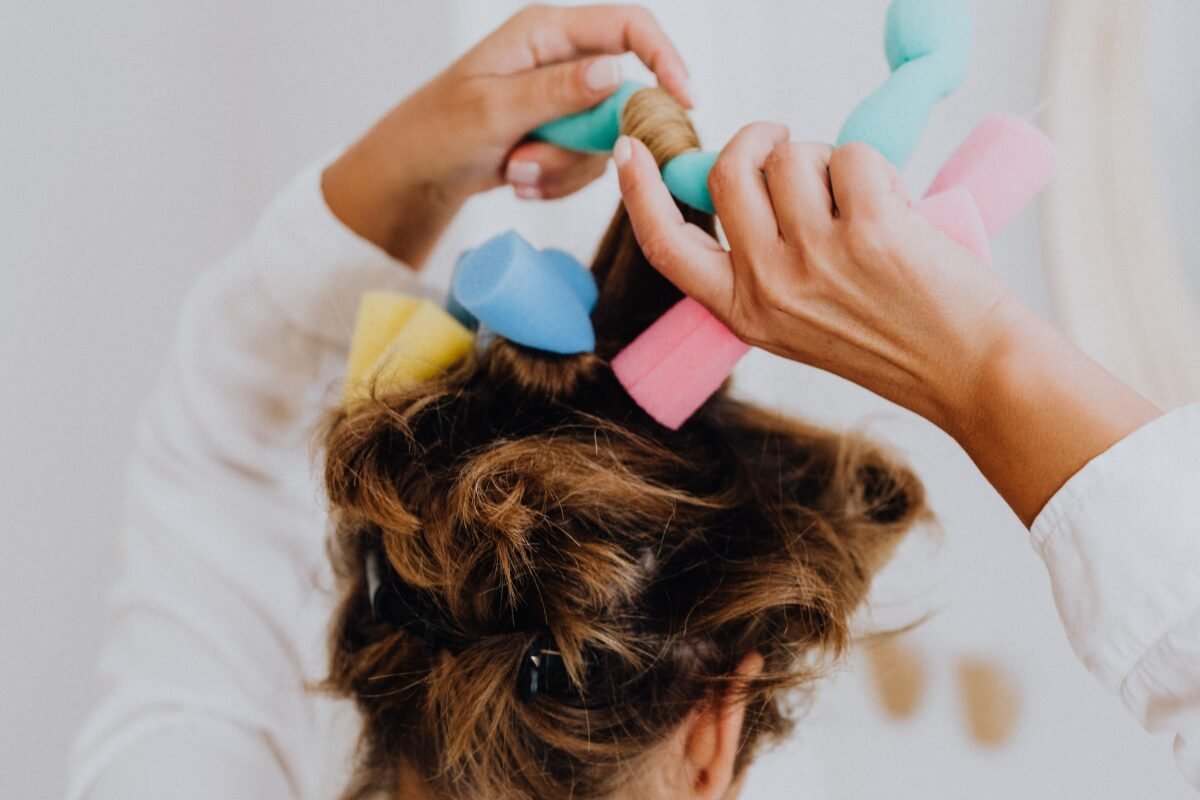
| Flexible rollers | Short to long hair | Foam or flexible rollers | 4 to 8 hours | Defined, bouncy curls | Low to medium | Moderate |
| Pin curls | Short to medium hair | Clips or pins | 4 to 8 hours | Small, tight curls | Medium | Moderate |
| Twisted buns | Medium to long hair | Soft ties or scrunchies | 6 to 8 hours or until dry | Loose waves | High | Easy |
Pick a method in 30 seconds
- Want the easiest overnight option? Try robe-tie curls, sock curls or loose braids.
- Want bouncy, defined curls? Try flexible rollers or pin curls.
- Have short hair? Pin curls, mini braids and small rollers suit it best.
- Have long, thick hair? Use more sections, so each one dries fully.
- Want beachy waves with almost no effort? Try braids or twisted buns.
- Have only a couple of hours? Use the headband method on almost-dry hair and accept a looser result.
Before You Start: Prep That Makes the Difference
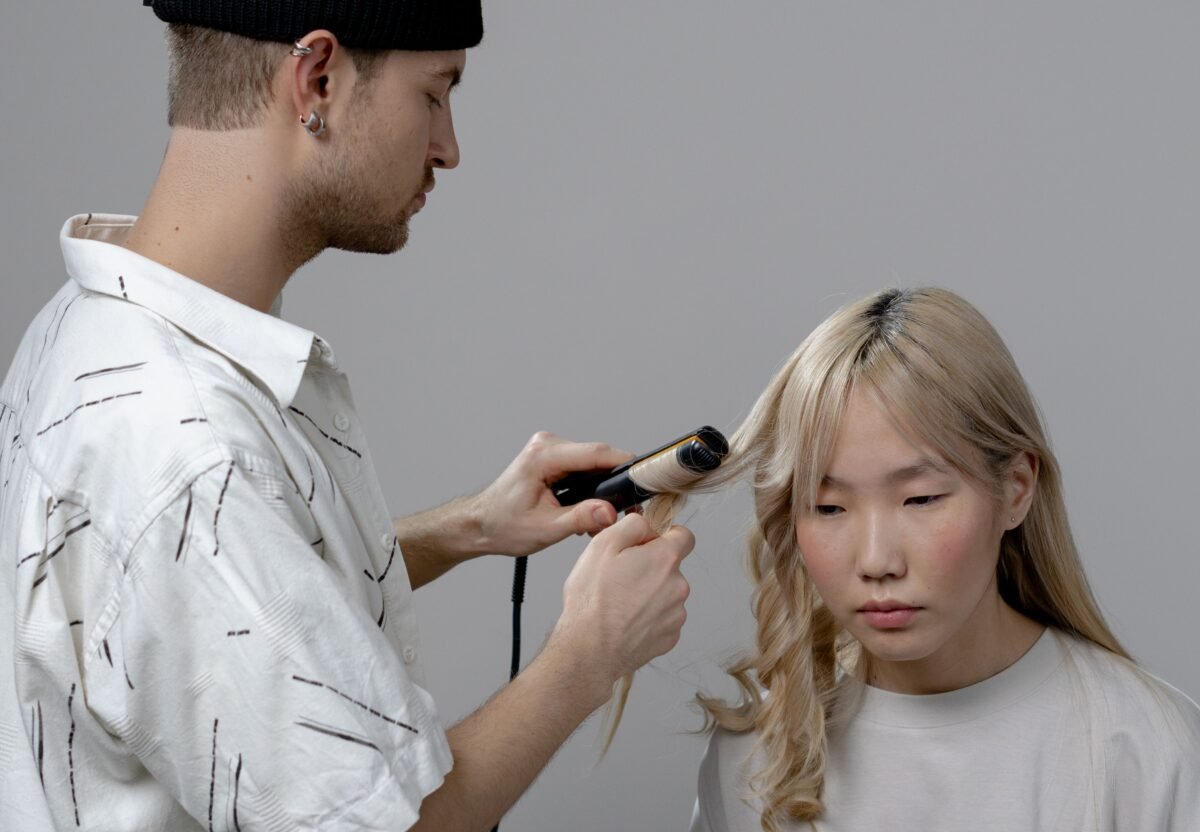
Good prep matters as much as the method you choose.
- Detangle first. Use a wide-tooth comb or a detangling brush from the ends upwards. Knots create uneven curls and breakage when you take the style down.
- Start with clean, manageable hair. Very oily or product-heavy hair can slip out of a wrap, while hair that is squeaky dry may look frizzy. Slightly clean, soft hair usually holds best.
- Use a light product. A small amount of mousse, curl cream or setting lotion is enough. Too much can leave hair sticky, heavy and slow to dry.
- Choose gentle tools. Soft fabric, scrunchies, flexible rollers and clips without sharp edges are kinder than tight elastics or rough towels.
- Part your hair the way you plan to wear it. Curls tend to fall in the direction they were set.
How Damp Should Your Hair Be?

This is the question most guides skip, and it is the one that decides whether your curls work.
The best starting point is slightly damp hair. As a handy rule of thumb, your hair should feel cool to the touch and mostly dry, without dripping or leaving a wet patch on your shoulders. how to do heatless curls Towel-dry gently, then let it air-dry until it reaches this stage.
Why not soaking wet hair?
- It may still be damp in the morning, which makes curls drop or turn frizzy.
- Wet hair stretches more easily, so tight wrapping puts extra strain on it.
- It takes longer to dry, which makes overnight methods less reliable.
Can you use completely dry hair? You can, but the result is usually weaker. If your hair is dry, lightly mist each section with water before wrapping it.
Check before you unwrap. Touch the hair near your scalp and in the middle of each wrap. If it feels cool or slightly damp, leave it longer. how to do heatless curls Taking curls down while hair is damp is a common reason they fall flat.
7 Easy Heatless Curl Methods to Try
1. Sock Curls
Best for: medium to long hair and anyone who wants soft, bouncy curls with minimal effort.
What you need: clean, soft socks (long, fuzzy or knee-high socks work well).
- Take a section of slightly damp hair about 2 inches wide.
- Lay the sock along the section and wrap the hair around the sock from the ends towards your scalp.
- Tie or knot the ends of the sock together to hold the hair in place.
- Repeat all over your head, using more socks or smaller sections for tighter curls.
- Leave until your hair is fully dry, then unknot and separate gently.
Tip: Keep the wrap flat and even. If the sock feels tight against your scalp, loosen it before you try to sleep.
2. Robe-Tie Curls
Best for: medium to long hair, bigger waves and a voluminous finish.
What you need: a soft robe belt, long scarf or strip of smooth fabric.
- Drape the fabric across the top of your head like a headband, with equal lengths hanging on each side.
- Take a section from the front and wrap it around the fabric, working from the ends towards the roots.
- Alternate sides, adding sections as you go, until all of your hair is wrapped.
- Tie the ends of the fabric together and secure the style loosely.
- Leave overnight or until dry, then unwrap slowly.
Tip: Choose fabric with a smooth surface. Rough fabric can rub your hair and cause frizz.
3. Headband Curls
Best for: a quick, low-effort style, especially when you have a few hours rather than a whole night.
What you need: a soft, stretchy headband that fits snugly without pinching.
- Put the headband on like a crown, sitting around your head.
- Take a small section from the front and wrap it around the headband, tucking the ends under.
- Continue around your head, taking sections of equal size.
- Leave for at least a few hours, or overnight if your hair is thick.
- Remove the headband carefully and unwind each section.
Tip: Because the tucked ends may be loose, results are often soft waves instead of tight curls. how to do heatless curls Use smaller sections if you want more definition.
4. Braids
Best for: almost every hair length, beachy waves and beginners.
What you need: soft hair ties or scrunchies (avoid tight elastics).
- Divide damp hair into two or more sections.
- Braid each section loosely from the roots to the ends, and secure it with a soft tie.
- Leave overnight or until fully dry.
- Undo each braid from the bottom and run your fingers through the waves.
Tip: Two larger braids give loose waves, while several small braids give a more crimped, textured finish. how to do heatless curls Keep the braids loose enough to avoid pulling at your scalp.
5. Flexible Rollers
Best for: defined, bouncy curls on any length, if you can tolerate a bulkier set.
What you need: foam or flexible rollers in the size you prefer.
- Take a section about as wide as the roller.
- Place the roller at the ends and roll the hair up towards the scalp, keeping it smooth.
- Bend or fasten the roller to secure it.
- Repeat all over your head, then cover your hair with a silk or satin scarf.
- Leave until dry and remove each roller slowly.
Tip: Larger rollers give bigger waves and smaller rollers give tighter curls. how to do heatless curls If lying on rollers is uncomfortable, position them away from the back of your head, or use them while you get ready instead.
6. Pin Curls
Best for: short to medium hair and small, vintage-style curls.
What you need: clips or pins and a little setting product.
- Take a small section and wind it around your finger into a flat coil.
- Slide the coil off your finger and pin it flat against your head.
- Repeat until all of your hair is pinned, then cover with a silk or satin scarf.
- Leave until dry, then remove the pins and separate the curls with your fingers.
Tip: Pin curls are time-consuming at first, but they give the most control over curl size and direction.
7. Twisted Buns
Best for: loose, natural-looking waves with very little skill needed.
What you need: soft ties or scrunchies.
- Divide your damp hair into two to four sections.
- Twist each section tightly enough to hold its shape, then coil it into a bun.
- Secure each bun with a soft tie.
- Leave until completely dry, then unwind and shake out the waves gently.
Tip: More buns create more waves and fewer buns create looser, bigger bends. how to do heatless curls Do not pin buns so tightly that your scalp feels sore.
Which Heatless Curls Work Best for Your Hair Type?
Most guides give the same instructions to everyone. Hair behaves differently, so adjust your method to suit yours.
Fine or Straight Hair
Fine, straight hair can be slow to take a curl and quick to drop one. Use smaller sections, a lightweight setting product and a method with more definition, such as flexible rollers or pin curls. how to do heatless curls Make sure your hair is completely dry before you unwrap it, and finish with a flexible-hold spray. Avoid heavy creams, which can weigh curls down.
Thick or Long Hair
Thick or long hair holds a curl well once it is set, but it takes longer to dry. Use more sections, so each wrap is small enough to dry fully. how to do heatless curls Begin with hair that is closer to dry than soaking, and plan to leave your style in overnight. Avoid piling too much hair into a single wrap, because the middle stays damp and the curl may collapse.
Short Hair
Short hair shrinks as it curls, so a tight set can end up much shorter than you expected. how to do heatless curls Use larger sections or bigger rollers for a looser result, and choose pin curls, mini braids or small rollers for control. Expect slightly less bounce at the ends.
Naturally Wavy or Curly Hair
If your hair already has texture, heatless methods can stretch, shape and define your natural pattern. Braids, twisted buns and rollers work well. how to do heatless curls Keep your hair detangled, add a curl cream to reduce frizz, and avoid brushing the curls out after you take them down, because brushing can break up the pattern and cause frizz.
How to Make Heatless Curls Last Longer
- Wrap them smoothly. Neat, even wraps give neat, even curls.
- Keep your sections consistent. Sections of different sizes create uneven curls.
- Use light products only. Too much product slows drying and can make curls limp.
- Make sure your hair is completely dry. This is the biggest factor in how long curls last.
- Take them down gently. Unwrap slowly and use your fingers to separate curls. Brushing usually pulls them out.
- Finish with a flexible-hold spray. Use a light mist from a distance, rather than a heavy coating.
- Protect them while you sleep. A silk or satin pillowcase, scarf or bonnet reduces friction and frizz.
- Be realistic about humidity. In humid weather, curls may relax faster. A flexible-hold spray and a looser style can help.
- Refresh on day two. Lightly mist your hair with water, scrunch the curls and re-wrap a few sections if needed.
Are Heatless Curls Bad for Your Hair?
Heatless methods avoid heat damage, but they are not automatically risk-free. Damage can still happen when you:
- wrap hair too tightly
- use rough fabrics or tight elastic bands
- wrap very wet hair, which stretches easily
- brush the curls out aggressively
- sleep on hard or uncomfortable tools
To reduce the risk, keep every wrap smooth and comfortable and use soft ties. how to do heatless curls Take the style down slowly. If your scalp feels sore, loosen the wrap or choose a gentler method.
Common Heatless Curl Mistakes and How to Fix Them
| Problem | Likely cause | How to fix it |
| Curls did not form | Hair too dry, sections too large or wraps too loose | Lightly mist hair before wrapping, use smaller sections and wrap more snugly |
| Roots look flat | Hair wrapped away from the scalp, or heavy product | Wrap closer to the roots and use lightweight products |
| Ends are straight | Ends not tucked in or wrapped properly | Start wrapping from the very ends and keep them smooth |
| Frizz | Brushing, rough fabric or hair taken down while damp | Unwrap fully dry hair, separate with fingers and use a satin scarf |
| Curls are too tight | Sections too small or wraps too tight | Use larger sections or loosen the curls with your fingers |
| Scalp feels sore | Wrap too tight, or hard tools against your head | Loosen the wrap, use softer tools or choose braids or buns |
| Hair is still damp in the morning | Hair too wet, sections too thick | Start with damper-than-dry rather than wet hair and use smaller sections |
| Curls drop within an hour | Hair not fully dry, or no hold | Allow more drying time and finish with a light flexible-hold spray |
| Kinks or dents in hair | Elastics or clips pressed into the hair | Use soft ties and avoid wrapping directly over clips |
Frequently Asked Questions
How long do heatless curls take?
Most methods need roughly 4 to 8 hours or until your hair is fully dry, and thick hair may take longer. That is why many people set them overnight.
Can you do heatless curls on dry hair?
Yes, but the result is usually softer. Mist each section lightly with water before wrapping it, then leave it for several hours.
How do I do heatless curls on short hair?
Use pin curls, mini braids or small rollers, and use larger sections than you think you need, because short hair springs up as it curls.
How long do heatless curls last?
It depends on your hair type, the weather and the product you use. Fine hair may drop curls sooner, while thick hair often holds them longer. A flexible-hold spray and a satin pillowcase can help.
Are heatless curls damaging?
They avoid heat damage, but tight wrapping, rough fabrics and brushing can cause breakage or frizz. Keep your wraps smooth and comfortable.
Do I need styling product for heatless curls?
Not always. A light product can help fine or straight hair hold its shape, but heavy products can slow drying and weigh curls down.
Can I sleep in heatless curls?
Yes, if the method is comfortable. Robe-tie, sock, braid and bun methods are usually easier to sleep in than rollers or pins.
Final Tips for Natural-Looking Heatless Curls
Choose your method based on your hair length, thickness and the amount of time you have, then focus on getting the basics right: slightly damp hair, smooth wraps, completely dry hair before you unwrap and a gentle takedown. Those four steps matter more than the specific tool you use.
Start with one method, notice how your hair responds, and adjust the section size, setting time or product. Within a few tries, you will know exactly which method works best for your hair.