How to Patch Jeans: A Step-by-Step Guide to Repairing Holes and Tears
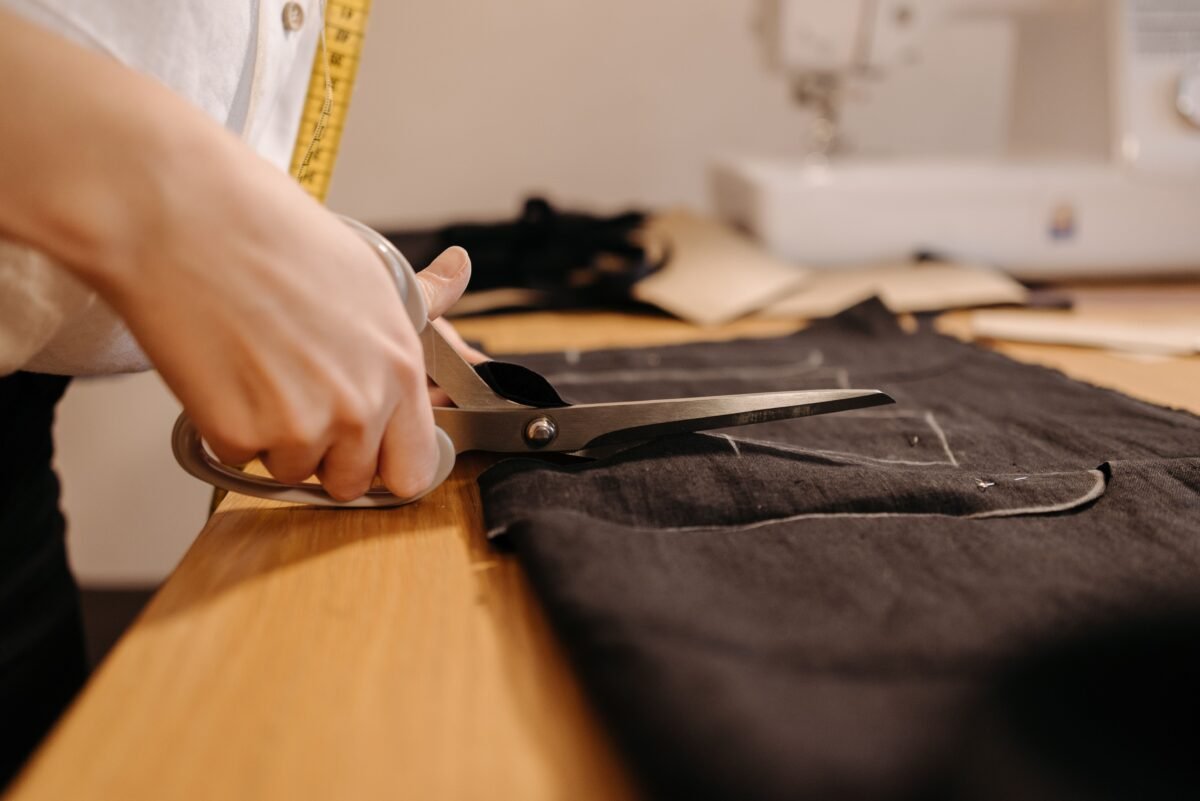
Jeans are built for everyday life, but constant movement, friction, and repeated washing eventually take their toll. A rip at the knee, thinning fabric along the inner thigh, or a small hole beside a pocket does not automatically mean your favorite pair belongs in the donation bag. Knowing how to patch jeans lets you repair damaged denim at home, save money, and keep comfortable denim clothing in regular rotation.
The best repair depends on three things: the size of the hole, the condition of the fabric around it, and the finish you want. how to patch jeans You can sew a patch by hand, use a sewing machine, press on an iron-on patch, or turn the repair into a feature with visible mending. Each approach works, and each has trade-offs that this guide explains.
One principle matters more than any technique: reinforce the weakened denim around the damage instead of simply covering the hole. A patch anchored to strong fabric stays put far longer than one attached only to frayed edges.
What You Need to Patch Jeans
Before you start, gather your materials and look closely at the damaged area. The right supplies make the repair easier and help you avoid unnecessary stitching or cutting.
Essential Tools and Materials
You do not need a full sewing studio. A handful of basics is enough for most small and medium holes.
- Denim patch or fabric scrap: a piece of denim or another sturdy, compatible fabric to reinforce the damage.
- Sewing needle: a strong needle suited to thick fabric if you plan to stitch by hand.
- Thread: polyester thread is a practical choice for everyday denim repairs because of its strength and resistance to abrasion.
- Fabric scissors: sharp blades for cutting the patch cleanly and trimming loose threads.
- Pins or clips: to hold the patch in place while you work.
- Ruler or measuring tape: for measuring the hole and the weak fabric around it before cutting.
Depending on your method, you may also want an iron, an iron-on patch, fusible adhesive, a thimble, or a sewing machine. how to patch jeans A thimble is especially useful for pushing a needle through thick denim. Take your time, and keep your fingers out of the needle’s path.
How to Choose the Right Patch Fabric and Thread
The patch should suit the weight and condition of your jeans. A lightweight scrap can work on a thin, soft pair, but heavier denim generally needs a patch that can handle similar wear.
For a subtle repair, pick a fabric close to the original color. how to patch jeans It may not vanish completely, especially if the surrounding denim has faded, but a close match makes it far less noticeable. This is particularly important with dark pairs: if you wear black dress jeans to the office, match both the patch and the thread carefully so the repair does not stand out. For a visible repair, choose contrasting fabric and thread and make the mend part of the design.
Size matters as much as fabric. Measure beyond the visible hole, because the denim around it is often thin too. how to patch jeans Cut a patch that reaches into sound fabric on every side. If the area is badly worn, expand the reinforcement instead of relying on a narrow border around the opening.
Rounded corners help prevent edges from lifting during normal wear. how to patch jeans Before you sew, check that the patch will not create an uncomfortable ridge against your skin.
Choose the Best Way to Patch Your Jeans
No single method suits every pair. how to patch jeans A small hole in an otherwise strong knee needs a different approach than broad thinning at the crotch. Consider the condition of the denim, your sewing skills, the tools you own, and whether you want the repair to blend in or stand out.
Sew-On Patches for a Durable Repair
Sewn patches are a great choice when you want a repair held by thread instead of relying only on adhesive. how to patch jeans You can apply them by hand or with a machine.
Hand sewing gives you precise control over stitch placement and suits anyone without a machine. how to patch jeans It is also ideal when you need to work around a narrow opening or an awkward section of the garment.
Machine sewing is faster for larger patches and wide areas of damage. how to patch jeans The catch is access: thick seams and narrow legs can make positioning difficult, and a machine only helps if you can reach the damaged spot without sewing the two sides of the leg together.
Whichever way you go, anchor the patch beyond the frayed edges. Stitching straight into weak fibers invites failure the next time the jeans stretch or rub.
Iron-On Patches for a Quick Fix
Iron-on patches carry a heat-activated adhesive on the back. Applied according to the manufacturer’s directions, the adhesive bonds the patch to the fabric.
This is a convenient option for small holes and simple repairs, and it suits anyone who would rather avoid hand sewing. how to patch jeans It is not right for every situation, though. Extensive damage, badly weakened denim, awkward seams, and areas under constant friction may need extra reinforcement, and an adhesive patch can fail if it is applied incorrectly or its edges do not bond.
Before you begin, check the instructions for temperature, pressing time, and fabric compatibility. Test the iron on a hidden area when appropriate, and protect the garment as directed. how to patch jeans Do not slide the iron back and forth unless the instructions allow it, since some patches need firm, steady pressure for a set time. For repairs that will stretch often, consider stitching the edges as well, and never apply heat to fabrics or finishes that cannot tolerate it.
Visible Mending With Decorative Stitches
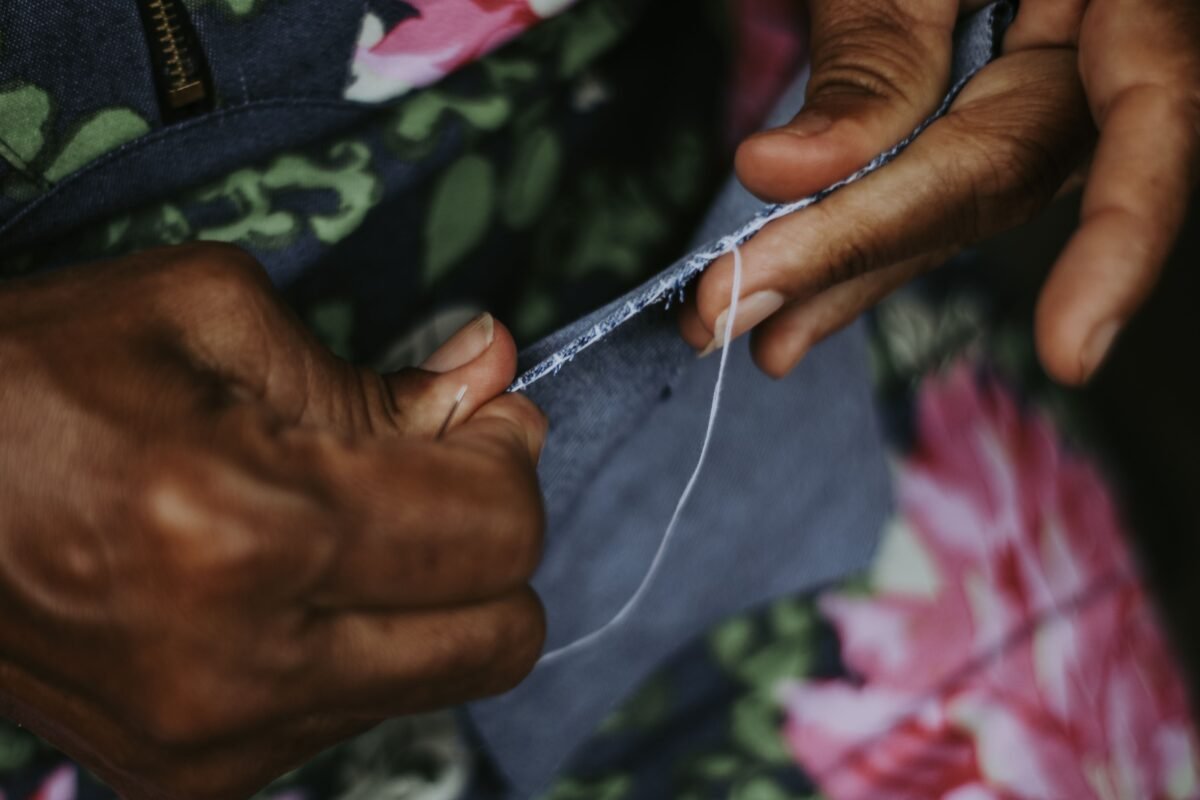
Visible mending treats the repair as a design element instead of hiding it. how to patch jeans You can use contrasting thread, a decorative patch, or sashiko-inspired stitching to create a distinctive finish.
Sashiko is a traditional Japanese technique known for repeated running stitches and patterned designs. For denim, a similar look can be created with rows of stitches across a patch or weak area.
Decoration should never replace reinforcement. how to patch jeans Choose a suitable patch fabric, position it over the damage, and make sure the stitches secure it to sound denim. Visible mending looks especially good on jeans that are already faded and worn in, and a contrasting patch often suits them better than a perfect color match. It is also the same spirit behind a patchwork denim dress, where mismatched pieces are the whole point.
Should the Patch Go Inside or Outside?
An inside patch is usually best for a subtle repair. how to patch jeans It sits behind the damage, supports the denim, and leaves the outside of the jeans less covered. An outside patch is the right call when you want the repair to show, and it can make placement easier because you can see exactly where it sits while you stitch.
Use this comparison to decide:
| Repair approach | Best for | Main benefit | Main consideration |
| Hand-sewn patch | Small or medium holes | Greater control over stitch placement | Takes time and patience |
| Machine-sewn patch | Larger repairs and broad weak areas | Efficient stitching over accessible sections | Requires a machine and suitable access |
| Iron-on patch | Convenient, straightforward fixes | Quick application without mandatory sewing | Adhesion and heat compatibility matter |
| Visible mending | Decorative repairs | Turns stitching into part of the design | Needs careful placement and even stitches |
| Professional repair | Extensive damage or difficult seams | Specialist techniques and equipment | May involve extra cost |
The best choice depends on where the damage is and how bad it is. how to patch jeans An inside patch is subtle but not necessarily invisible, and an outside patch looks decorative but still needs its edges secured properly.
How to Patch Jeans by Hand
Hand sewing is a practical way to repair jeans without a machine. It takes basic supplies, a little patience, and close attention to the weak fabric. how to patch jeans It suits many small and medium holes, although large tears and complicated seam damage may call for a more involved fix.
Step 1: Prepare the Damaged Area
Inspect the jeans from both sides. Find the full extent of the hole and look for thin, discolored, or frayed fabric around it.
If needed, wash the jeans according to the care label and let them dry completely before you begin. Clean fabric is easier to position accurately. how to patch jeans Trim only the loose threads that get in the way, and avoid cutting away healthy denim or enlarging the hole.
If the tear is surrounded by widespread thinning, plan to cover a larger area. The visible opening may be much smaller than the zone that actually needs support. how to patch jeans For an inside repair, turn the jeans inside out and smooth the fabric on a flat surface so you can see exactly where the patch should go.
Step 2: Cut the Patch to Size
Hold your patch fabric over the damage and estimate the coverage you need. The patch should extend past the hole on every side, and how far depends on the tear and the condition of the denim. how to patch jeans Weak or frayed fabric needs a bigger reinforcement area than a clean tear in strong material.
Cut neatly with fabric scissors, and round the corners to avoid sharp points that can catch or lift. If you are repairing the inner thigh or crotch, think about comfort: a patch that is too thick or stiff can rub and restrict movement. Before attaching it, lay the patch against the jeans to confirm that it covers the damage without interfering with nearby seams.
Step 3: Position and Secure the Patch
Place the patch on your chosen side. how to patch jeans For an inside repair, put it behind the hole so the damage sits over the center of the patch. For an outside repair, center it over the opening.
Smooth both layers until the denim lies flat, with no folds or stretched sections. Pin or clip the edges, keeping pins out of your stitching path where possible and removing them as you go so you never sew over one.
Gently move the jeans to check that the patch does not form a large wrinkle or pull the damaged fabric out of shape. how to patch jeans If the hole has ragged edges, arrange the fabric so the opening is supported rather than forcing the edges together, because pulling a tear closed can make the finished repair pucker.
Step 4: Sew the Patch in Place
Thread a suitable needle and tie a secure knot at the end. If you are new to hand sewing, practice a few stitches on a denim scrap first. Then:
- Start in sound fabric near the patch edge, leaving enough room to anchor the thread.
- Make small, consistent stitches around the perimeter of the patch.
- Keep the patch and jeans flat as you work.
- Continue around the edges at an even distance from the patch boundary.
- Reinforce high-strain spots, as long as the fabric can handle extra stitching.
- Check the reverse side now and then to make sure the needle has not caught another part of the jeans.
A running stitch, where the needle passes in and out in a repeating line, is a simple option for beginners. A backstitch creates a more continuous line and is useful when you need extra strength. how to patch jeans The right stitch depends on the patch, the damage, and the finish you want, and decorative stitching is fine as long as the patch stays firmly attached.
Do not pull the thread so tight that the denim gathers, and do not leave stitches so loose that the patch shifts. Aim for steady, consistent tension. If the needle resists several layers of denim, use a suitable needle and a thimble rather than forcing it with your fingertips.
Step 5: Finish and Inspect the Repair
Once the patch is secure, fasten the thread with a finishing knot and trim the excess without cutting the stitches. Remove any leftover pins and inspect both sides. Look for gaps, loose edges, uneven tension, and spots where the patch does not lie flat.
Flex the jeans as you would in ordinary movement. The repair should not feel overly stiff or pull sharply against the surrounding fabric. If you find a loose section, fix it before wearing them. how to patch jeans And if the denim around the patch is still weak, extend the reinforcement instead of just adding more stitches around the original hole. A good repair supports the damaged area while keeping the jeans comfortable.
How to Patch Jeans With a Sewing Machine
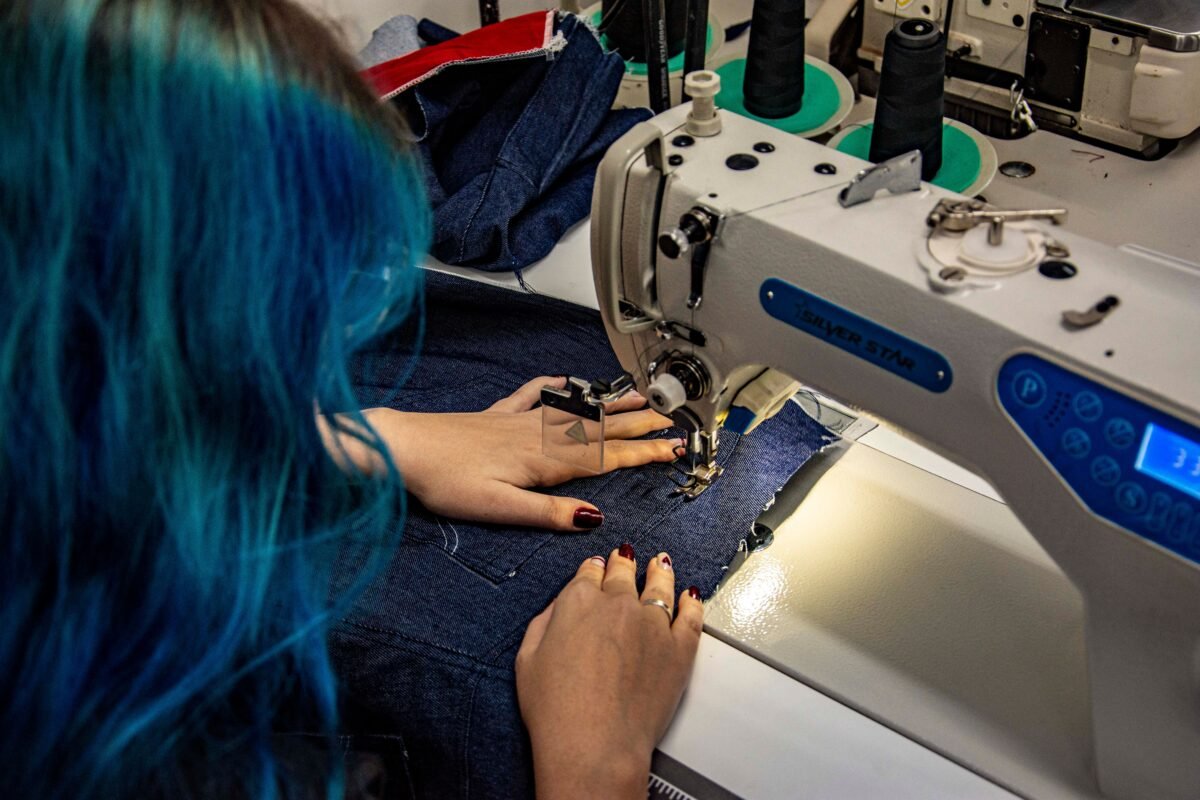
A sewing machine is useful for larger holes or for attaching a patch across a broad section of denim, especially when you need consistent stitching along several edges. It does require access to the damaged area, so do not rush, particularly near thick seams.
Prepare the Machine and Denim
Choose a needle designed for denim and a compatible thread. Check your machine’s manual for the right needle, stitch settings, and guidance on heavy fabric. Pin or clip the patch in place, and if you can, test your stitching on a denim scrap of similar thickness first.
Arrange the jeans so the damaged area fits beneath the presser foot. In a narrow leg you may need to maneuver carefully so you do not stitch through both layers. Thick intersections are hard to sew, so do not force the machine through a bulky section if it struggles.
Stitch Over the Damaged Area
Lower the presser foot and sew slowly around the patch edges, keeping a consistent distance from the boundary. Keep the fabric flat in front of the needle and guide it gently instead of pulling it through. Secure the start and end of your stitching according to your machine’s instructions, then check the reverse side to confirm the patch is attached and no unintended folds got caught.
If the denim is thin over a wide area, a small patch will not be enough, so use a larger reinforcement that reaches into stronger fabric. Avoid sewing repeatedly over the same narrow line just to make the repair feel stronger; too much stitching creates a stiff, bulky patch without fixing weakness beyond its edges. how to patch jeans When the garment’s construction makes access difficult, hand sewing may be easier, and a tailor is often the better choice for major damage near the crotch or complicated seams.
How to Patch Different Areas of Jeans
Where the hole sits changes how you should approach it. Spots that bend, rub, or stretch often need more attention than areas that barely move.
Patching a Hole in the Knee
Knee holes are common because the fabric bends constantly when you walk, sit, and kneel. Start by checking the surrounding denim. If the hole is small and the fabric is still strong, a patch that extends into sound material may be enough. how to patch jeans If the knee is thin across a larger area, reinforce the whole weak section.
An inside patch supports the knee without covering the outside, while an outside patch suits a decorative finish or easier visibility while stitching. Keep the knee flat as you position the patch, and if you use a machine, make sure the leg is arranged so the needle will not catch the other side. When you finish, bend your knee gently and inspect the repair to make sure the patch does not pull tight.
Repairing a Tear in the Inner Thigh or Crotch
Inner-thigh and crotch damage is trickier because of constant friction and movement, and the fabric often thins over a broad area before a hole appears. Look closely to see whether the damage is a small opening or runs toward a seam. how to patch jeans A narrow tear in strong denim may be manageable at home, while widespread thinning may need a larger patch or more specialized reinforcement.
Choose a patch that supports the weak fabric without adding bulk, which matters most where the material touches skin. how to patch jeans Work slowly around curves and seams, keep the garment flat where you can, and check often that you are stitching only the layers you intend. If a seam has opened, the denim is badly worn, or the repair would change the fit, consider professional help. A tailor can often reinforce the area while preserving the original construction.
Fixing a Hole Near a Pocket or Seam
Holes near pockets and seams call for careful placement because several layers overlap. First work out whether the problem is a hole in the denim or a seam that has come apart. A split seam may simply need resewing, not a patch.
If a patch is the right fix, position it so the reinforcement extends past the weak spot without blocking the pocket opening or changing how the garment works. Avoid cutting into the original seam unless the repair demands it. Near a rivet, waistband, or other bulky section, hand stitching usually gives more control than a machine, and extensive damage in these spots may be best left to a professional. The same logic applies if you are mending a denim dress with pockets, where the pocket edges take a lot of strain.
Patching Other Denim Pieces
The same techniques work beyond classic five-pocket jeans. A denim dress or jean overall dress can wear out at the pocket corners, the hem, or the seat, and you can patch these areas using exactly the methods above. Match the weight of the patch to the weight of the garment, because lightweight denim in a summer dress needs a lighter patch than heavy jeans.
Repairs also keep your favorite looks in circulation. A neat mend means your go-to jeans outfit stays wearable for another season, whether that is a wide leg jeans outfit, a flare jeans outfit, or a white jeans outfit that needs an inside patch and matching thread to stay clean. Many of the blue jean outfits you already love can be rescued the same way. And if you like the look of distressed denim, remember that a deliberate tear is different from structural wear: intentional fraying can stay as it is, while thinning fabric needs reinforcement before it becomes a hole.
Common Patching Problems and How to Avoid Them
Even a carefully planned repair can run into trouble if the patch is badly positioned or the surrounding fabric is weaker than it looks.
The Patch Wrinkles or Puckers
Puckering happens when the patch and denim are not lying flat or when stitches pull unevenly. Smooth both layers before sewing and secure the patch with pins or clips, then work gradually around the edges. Keep your thread tension consistent: tight stitches gather the denim, while loose ones let the patch shift. If the fabric has already puckered badly, remove part of the stitching, reposition the patch, and sew that section again.
The Edges Begin to Lift
A patch lifts when adhesive has not bonded properly, the edges were not secured, or friction is repeated. For an iron-on patch, confirm that the fabric is compatible and that you used the right temperature and pressing time. For a sewn patch, inspect the perimeter and add stitching where needed if the fabric can support it, and avoid placing extra stitches only into loose or frayed fibers. Rounded corners and generous coverage help, but they do not make a patch immune to wear.
The Fabric Tears Again Beside the Patch
A new tear next to a patch usually means the surrounding denim was already weak. The original hole was easy to see, but the fibers around it may have been thin across a larger area, so the next tear forms just past the edge of a patch that was too small. Inspect the whole damaged section before repairing it, extend the patch into stronger fabric, and choose reinforcement suited to the location. Adding more stitches to a small patch will not solve widespread wear, because the repair must support the area that is actually weak.
The Repair Feels Too Bulky
Bulk makes jeans uncomfortable, especially around the inner thigh, crotch, and knees. Choose a patch fabric compatible with the original denim, skip unnecessary layers, and keep stitching secure but not overly tight. Check the inside of the garment carefully: if the patch creates a hard ridge or restricts movement, reconsider its size, placement, or material. A repair should strengthen the jeans without making them hard to wear.
Frequently Asked Questions
How do you patch jeans by hand?
Turn the jeans inside out for a subtle repair. Place a denim patch behind the hole, extending it into sound fabric around the damage. Secure the patch, then sew around its edges with small, consistent stitches. Finish by securing the thread and checking the repair from both sides.
Can you patch jeans without a sewing machine?
Yes. Hand sewing works for many small and medium holes. Position a fabric patch behind or over the damage, secure it with pins or clips, and stitch it in place. An iron-on patch may also work for certain repairs when the fabric and instructions allow it.
Is it better to patch jeans from the inside or outside?
An inside patch usually creates a less noticeable repair because it sits behind the damaged denim. An outside patch is more visible and can become a decorative feature. The best choice depends on the location of the hole, the condition of the surrounding fabric, and the look you want.
Do iron-on patches work on jeans?
They can, when they are compatible with the fabric and applied correctly. Follow the manufacturer’s instructions for temperature and pressing time. For holes in areas with frequent friction or movement, additional reinforcement may be appropriate.
How big should a patch be for ripped jeans?
It should extend beyond the visible hole into sound fabric on every side. If the denim around the hole is thin or frayed, use a larger patch that covers the weak area. The goal is to attach the repair to fabric strong enough to support it.
How do you patch a hole in the knee of jeans?
Inspect the knee to see how much fabric is damaged. Position a patch behind or over the hole so it extends into sound denim, secure it with pins or clips, and sew around the edges. Check that the repair stays comfortable when you bend your knee
Keep Your Favorite Jeans in Wearable Condition
Learning how to patch jeans gives you a practical way to deal with holes, tears, and worn denim without replacing the garment right away. The right method depends on the damage, the strength of the surrounding fabric, and the finish you want.
For a subtle repair, an inside patch secured with hand or machine stitching may be the best fit. Iron-on patches offer a convenient option in certain situations, and visible mending can turn a repair into a design feature.
The most useful rule is simple: reinforce the weakened denim, not just the visible hole. Choose a patch that extends into sound fabric, secure its edges, and check that the finished repair stays comfortable when you move.
Ready to give your favorite jeans another go? Gather a denim scrap, a needle, thread, and scissors, pick the patching method that suits your repair, and start by reinforcing the fabric around the damage for a more dependable finish.