A keratin treatment is a salon smoothing service. A stylist applies a keratin-based formula to your hair, dries it, and seals it with a flat iron. The result is smoother, shinier, less frizzy hair that usually lasts about two to five months. It does not permanently change your hair, and some formulas release formaldehyde when heated, What Is Hair Keratin Treatment so the ingredient list, ventilation and your personal health situation matter.
What Is Hair Keratin Treatment?
If you are asking what is hair keratin treatment, the short version is this: it is a semi-permanent smoothing service that coats the hair shaft with a keratin-based solution and locks it in with heat. The goal is to reduce frizz, soften waves and curls, and make hair easier to style.
Keratin itself is a protein. It is the main structural protein in your hair, skin and nails, and it is what gives hair its strength and shape. What Is Hair Keratin Treatment In a salon treatment, the keratin comes from sources such as animal hair, wool or feathers, which is broken down into smaller pieces so it can be applied to the hair.
It helps to be clear about what a keratin treatment is not:
- It is not a permanent straightening service. It fades with washing and time.
- It is not the same as a chemical relaxer, which breaks and reforms the hair’s internal bonds.
- It is not a deep conditioning mask, even though the results can feel similar for a while.
- It does not repair split ends or grow hair. Anyone promising growth or permanent repair is overselling.
Most people choose it because they are tired of daily frizz, long blow-dry sessions or humidity that undoes their styling. Others want softer, more manageable curls rather than fully straight hair. What Is Hair Keratin Treatment That depends heavily on the formula and the technique, which we cover below.
How Does a Keratin Treatment Work?
Every strand of hair is covered by overlapping scales called the cuticle. When the cuticle is rough or lifted, What Is Hair Keratin Treatment hair looks frizzy and dull and tangles easily. Heat, bleach, coloring, humidity and friction all roughen it.
A keratin treatment works in three layers:
- Coating: The formula settles onto the cuticle and fills in rough areas, creating a smoother surface.
- Bonding with heat: Flat-iron heat helps the product set on the hair, forming a thin film around each strand.
- Shaping: Because the hair is dried and sealed in a smoother, straighter shape, it holds that shape until the coating gradually washes away.
The important detail is the “smoothing agent” that helps the formula set. Many traditional keratin smoothing products rely on formaldehyde or on ingredients that release formaldehyde gas when heated, such as methylene glycol, formalin or similar compounds. What Is Hair Keratin Treatment Newer products are marketed as “formaldehyde-free” and use other chemistry, such as glyoxylic acid or other agents. As we explain in the safety section, “formaldehyde-free” on a label is not always the full story, so it is worth asking questions.
What Happens During a Salon Keratin Treatment?
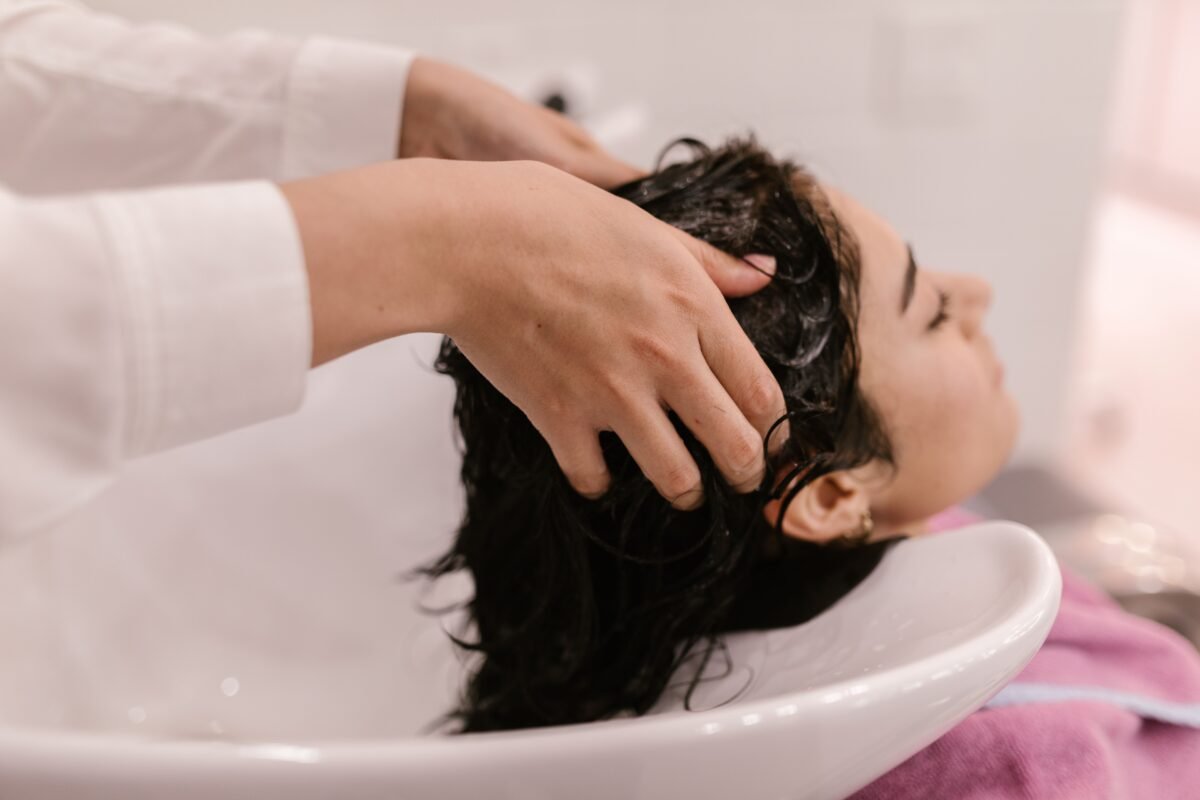
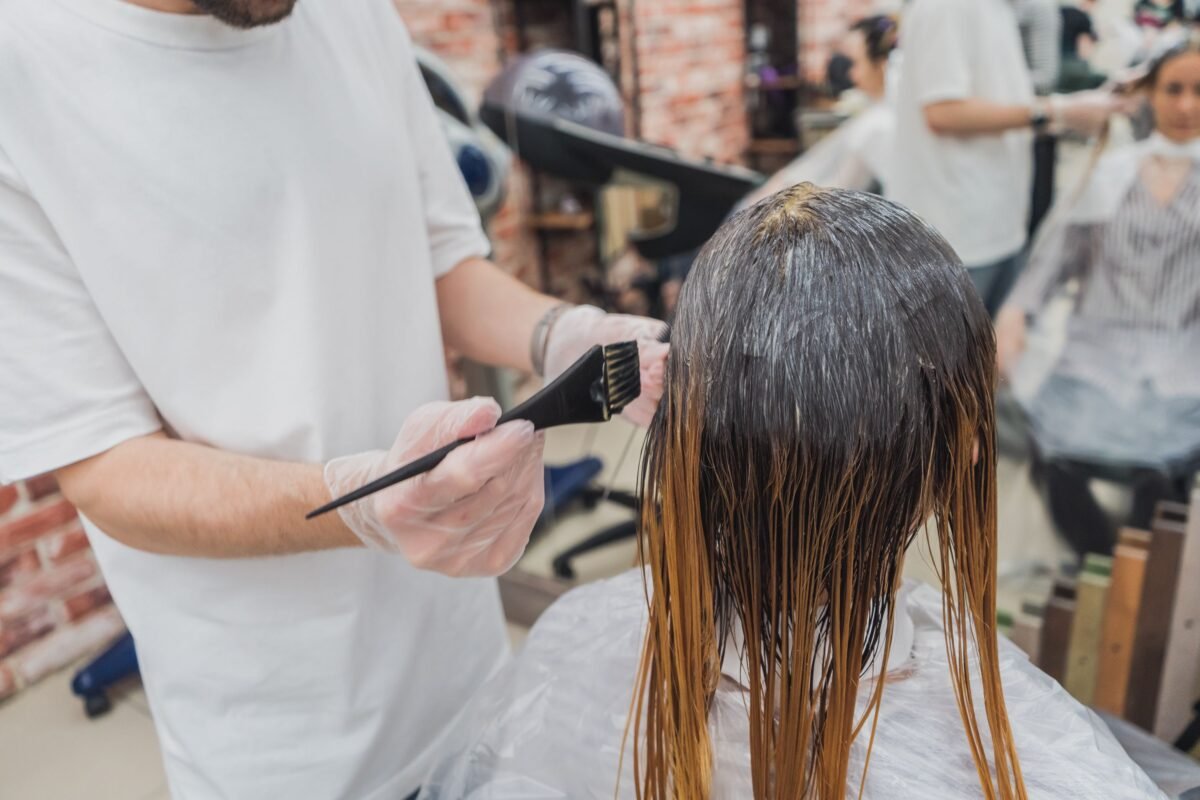
The exact method varies by brand, but a typical appointment follows this order. What Is Hair Keratin Treatment Expect roughly two to four hours depending on your hair length, thickness and the product used.
Step 1: Consultation, assessment and cleansing
A good stylist starts by checking your hair history: color, bleach, previous smoothing or relaxers, and any scalp sensitivity. What Is Hair Keratin Treatment They should also ask about pregnancy, breathing conditions such as asthma, and allergies. Then your hair is washed with a clarifying shampoo to remove oils and product buildup so the formula can penetrate evenly.
Step 2: Applying the keratin formula
The hair is towel-dried and divided into sections. The stylist applies the formula strand by strand, What Is Hair Keratin Treatment usually staying a little away from the scalp to reduce skin contact. The product then sits on the hair for a set time, often around 20 to 30 minutes, though instructions differ.
Step 3: Blow-drying, heat sealing and finishing
The hair is blow-dried, often with the formula still in it, then flat-ironed in thin sections at a high temperature specified by the manufacturer. This heat step is the main moment when fumes can be released from some formulas, What Is Hair Keratin Treatment which is why ventilation matters. Some systems then include a rinse or a finishing treatment.
Step 4: Aftercare instructions
Before you leave, you should be told exactly when you can wash your hair and which products to use. What Is Hair Keratin Treatment Different brands have different rules, so ask for them in writing.
What Are the Benefits of Keratin Treatment?

When it is done well, on suitable hair, with a well-chosen formula, people commonly report:
- Noticeably less frizz, especially in humid weather.
- Smoother, shinier hair because the cuticle surface is more even.
- Faster styling. Blow-drying time is often shorter and hair air-dries more smoothly.
- Softer, looser curls or waves instead of tight, unpredictable texture.
- Easier detangling, which can reduce breakage from brushing.
These are cosmetic benefits. They are real, but they are also temporary and depend on your hair type and how you care for it afterward. What Is Hair Keratin Treatment A keratin treatment is a styling service rather than medical hair repair, so expectations should stay realistic.
Will Keratin Treatment Make My Hair Straight?
Not necessarily, and this is the most common misunderstanding.
- Wavy hair: Often ends up smooth and fairly straight or very softly wavy.
- Curly hair: Usually becomes looser and less frizzy, not pin-straight, unless the stylist uses a stronger formula and more heat.
- Coily or very tightly textured hair: Results vary a lot. Some people get noticeable relaxation, others only a softer texture. This is also the hair type where stylist skill and formula choice matter most.
- Straight hair: Mainly gains smoothness and shine.
If you want to keep your natural curl pattern, tell your stylist clearly and ask whether a lighter “smoothing” version is available. What Is Hair Keratin Treatment Ask to see photos of similar hair types they have treated, not just generic before-and-after images.
What Are the Side Effects and Risks?
This is the section many articles rush through. What Is Hair Keratin Treatment It deserves attention, because the risks vary depending on the product, the setting and the person.
Formaldehyde exposure and ventilation
Formaldehyde is a colorless gas with a strong smell that is classified as a human carcinogen by the International Agency for Research on Cancer. Some keratin products contain it, or contain ingredients that release it when heated with a flat iron. In the United States, What Is Hair Keratin Treatment workplace safety regulators and the Food and Drug Administration have issued warnings about formaldehyde in hair smoothing products, and OSHA published a hazard alert for salon workers in 2010.
Possible short-term effects of exposure during or after treatment include:
- Burning or watering eyes
- Nose and throat irritation, coughing or wheezing
- Headache, dizziness or nausea
- Skin or scalp irritation, rash or blisters
The people most exposed are often the stylists, who repeat the process many times a week. What Is Hair Keratin Treatment A responsible salon will have good ventilation, such as open windows, exhaust fans or extraction systems, and will use protective equipment.
Important: A product labeled “formaldehyde-free” may still contain ingredients that release formaldehyde under heat. Check the ingredient list for names such as formalin, methylene glycol, methanediol, formaldehyde or similar terms, and ask the stylist to show you the safety data sheet for the product. What Is Hair Keratin Treatment Regulations and enforcement differ between countries, so do not assume a product is safe simply because it is sold in a salon.
Hair dryness, breakage or curl-pattern changes
High-heat flat ironing on already weak hair can lead to dryness, brittleness or breakage. Hair that is heavily bleached, previously relaxed or already damaged is at higher risk. What Is Hair Keratin TreatmentSome people also find their natural curl pattern looks different as the treatment grows out, with a visible line between treated and untreated hair.
Scalp irritation and allergic reactions
Product that touches the scalp can cause irritation in sensitive people. If you have eczema, psoriasis, What Is Hair Keratin Treatment an active scalp condition or a history of reactions to hair products, talk to your stylist and consider a patch test or a medical opinion first.
Hair loss concerns
If a product irritates the scalp or the hair breaks because of heat or improper application, you may notice shedding or thinning. That is not the same as the treatment “causing baldness” in every case, What Is Hair Keratin Treatment but it is a reason to choose an experienced stylist and not to repeat the service too often. If you notice hair loss, stop treatments and see a doctor or dermatologist.
Who should avoid it or speak to a professional first?
Talk to a doctor or qualified professional before booking if any of these apply:
- You are pregnant or breastfeeding
- You have asthma, allergies or sensitive airways
- You have a scalp condition or open wounds on the scalp
- Your hair is severely damaged or very recently bleached
- You have had a reaction to hair-smoothing or relaxing products before
This article is general information, not medical advice.
How Long Does a Keratin Treatment Last?
Most treatments last about two to five months, and some people get up to six months with very careful care. What Is Hair Keratin Treatment The result does not switch off on a specific day. It fades gradually. Several things affect how long it lasts:
- Formula and brand: Stronger formulas typically last longer; gentler ones fade sooner.
- How often you wash: Frequent washing shortens the result.
- Shampoo choice: Harsh, stripping shampoos speed up fading.
- Heat, chlorine and salt water: Swimming and heavy heat styling wear the coating down.
- Your hair type: Porous or highly textured hair may need more frequent touch-ups.
Repeating the treatment too frequently is not a good idea, especially if the formula contains harsh ingredients. What Is Hair Keratin Treatment Follow the professional’s recommended interval and give your hair time to recover.
Keratin Treatment Aftercare: What Should You Do?
Aftercare is where results are won or lost, and it differs by product. What Is Hair Keratin Treatment Treat the following as general guidance and always follow your stylist’s written instructions.
In the first days:
- Wait before washing. Many traditional systems ask you to wait around 48 to 72 hours before the first wash, but some modern formulas allow earlier washing. Ask for your exact timing.
- Avoid tying or clipping hair if your instructions say so, to prevent dents or creases.
- Keep hair dry and avoid heavy sweating, steam, pools and rain during the waiting window, if instructed.
For the weeks after:
- Use sulfate-free shampoo and a gentle conditioner. Some brands also recommend avoiding salt-based (sodium chloride) products. Check what your manufacturer says rather than assuming.
- Limit heat styling and always use a heat protectant.
- Wash less often if your scalp allows it.
- Protect from chlorine and sea water with a swim cap or by rinsing and conditioning before and after.
- Sleep on a silk or satin pillowcase to reduce friction.
- Book trims to remove split ends, which keratin does not repair.
How Much Does a Keratin Treatment Cost?
There is no single honest price, because cost depends on where you live, the salon’s pricing level, the brand of product, your hair length and thickness, and the stylist’s experience. What Is Hair Keratin Treatment A short, fine-haired appointment at a small salon can be far cheaper than a long, thick-haired appointment at a premium salon.
Use these tips when comparing quotes:
- Ask what is included: consultation, take-home shampoo, touch-ups.
- Ask which exact product is used, and its ingredient list.
- Be cautious about very cheap offers, since low prices may mean lower-quality or undisclosed formulas.
- Compare cost per month of results, not only the upfront price.
Keratin Treatment vs. Brazilian Blowout vs. Hair Relaxer
These terms are often mixed up. Here is a simple comparison.
| Feature | Keratin treatment | Brazilian blowout | Chemical relaxer |
| Main purpose | Smooth and reduce frizz | Smooth and reduce frizz | Permanently straighten |
| How it works | Coats hair, sealed with heat | Branded keratin-style smoothing system | Chemically breaks and reforms hair bonds |
| Typical duration | About 2 to 5 months | About 2 to 3 months, depending on product | Permanent on treated hair; new growth needs touch-ups |
| Straightening strength | Mild to moderate | Mild to moderate | Strong |
| Formaldehyde concern | Depends on formula | Depends on formula | Different chemicals, with their own risks |
| Best for | Frizz, manageability, softer texture | Similar to keratin | People wanting a lasting straight result |
“Brazilian blowout” is a brand name that became a general term, so details differ by product. What Is Hair Keratin Treatment Relaxers use strong alkaline chemicals and carry different risks, including scalp burns and damage if used improperly.
Is Keratin Treatment Right for Your Hair Type?
| Hair type | What to expect | What to ask your stylist |
| Fine hair | Smoother, but heavy formulas may weigh it down | Is there a lightweight option? |
| Thick hair | Often the biggest drop in frizz and styling time | Will the application time be longer? |
| Wavy hair | Smoother, more polished waves or straighter hair | Can you keep some natural movement? |
| Curly hair | Looser, less frizzy curls | How will it affect my curl pattern? |
| Coily hair | Varies widely | Have you treated my texture before? Can I see examples? |
| Color-treated hair | Possible, but timing and condition matter | How long should I wait after coloring? |
| Bleached or damaged hair | Higher risk of dryness and breakage | Should I strengthen my hair first or skip it? |
If you plan to color your hair, ask whether to color before or after the treatment. Many professionals suggest coloring first, then waiting before smoothing, What Is Hair Keratin Treatment but timing depends on the product. Do not guess.
How to Choose a Safe Salon and Stylist
Before you book, ask these questions:
- Which product do you use, and can I see the ingredient list or safety data sheet?
- Does the product contain or release formaldehyde?
- How is the room ventilated?
- Do you do a strand test or patch test?
- How many times have you treated hair like mine?
- What are the exact aftercare instructions, in writing?
- What happens if I have a reaction?
Warning signs include a stylist who refuses to name the product, who dismisses your health concerns, who has no ventilation, or who guarantees permanent results.
What About At-Home Keratin Kits?
At-home smoothing kits exist, but they are not the same as salon systems. Many are milder, giving a lighter and shorter-lasting effect. What Is Hair Keratin Treatment Others may still contain risky ingredients. If you try one, follow the instructions exactly, work in a well-ventilated space, avoid the scalp, test a small section first, and do not use high heat beyond what the product allows. For most people with long, thick, colored or damaged hair, a professional assessment is the safer choice.
Common Mistakes to Avoid
- Treating it as a miracle repair. It smooths the surface; it does not rebuild damaged hair.
- Skipping the consultation. Your history decides what is safe.
- Choosing on price alone.
- Washing too early or with the wrong shampoo.
- Stacking treatments such as bleach, a relaxer and keratin in a short window.
- Ignoring symptoms. Strong eye, throat or skin reactions are a reason to stop and get advice.
Is a Keratin Treatment Worth It?
It can be, for the right person. If your main problem is frizz and styling time, your hair is in reasonably good condition, you find a skilled stylist and a transparent product, and you are willing to follow aftercare, many people are happy with the result. If you are pregnant, What Is Hair Keratin Treatment have breathing or scalp sensitivities, have very damaged hair, or want a permanent change, other options may suit you better. These include deep conditioning, a smoothing blow-dry, a gentler non-formaldehyde system or simply a better haircare routine.
The best decision comes from knowing exactly what is in the product, how the room is ventilated, and how your own hair and health fit the treatment.
Frequently Asked Questions
What is a keratin treatment in simple words?
It is a salon service that coats your hair with a keratin-based smoothing formula and seals it with a flat iron. The result is smoother, shinier, less frizzy hair that lasts for a few months before gradually washing out. It does not change your hair permanently.
Is keratin treatment safe for hair?
It can be safe when applied correctly to healthy hair, but risks depend on the formula and the person. Some products release formaldehyde when heated, and high heat can dry out weak hair. Ask about ingredients, ventilation and your own suitability before booking.
Does keratin treatment damage hair?
It does not automatically damage hair, but poor technique, harsh formulas, repeated treatments or heat on already damaged hair can cause dryness and breakage. Healthy hair treated by an experienced stylist is less likely to have problems.
How long does a keratin treatment take?
Most appointments take about two to four hours. The time depends on hair length, thickness and the specific product. Thick or very long hair usually takes longer. Your stylist should give you an estimate during the consultation.
Can keratin treatment cause hair loss?
It is not a typical outcome, but scalp irritation or breakage from heat and chemicals can lead to shedding. If you notice thinning or a sore scalp after treatment, stop further smoothing services and speak to a doctor or dermatologist.
What should I do after a keratin treatment?
Follow your stylist’s written instructions. Commonly that means waiting before the first wash, using sulfate-free shampoo, limiting heat, avoiding chlorine and salt water, and trimming regularly. Timings differ by product, so confirm yours.
Can you get keratin treatment on colored hair?
Often yes, but the condition of the hair and the timing matter. Bleached or fragile hair has a higher risk of damage. Discuss your color history with the stylist, and ask whether to color before or after smoothing.
Final Takeaway
A keratin treatment is a temporary, cosmetic smoothing service, not a permanent fix or a medical treatment. It can make hair smoother, shinier and easier to manage for a few months, but the product ingredients, the salon’s ventilation, your health and your hair’s condition all matter. Ask questions, read the ingredient list, follow aftercare, and choose a stylist who is open about what they use. If anything about your health or your hair history worries you, check with a doctor or dermatologist before booking.