What color is the dress? In real life, the dress in the famous 2015 photo was blue with black lace. The photograph, however, was taken under confusing lighting, and that made a large share of viewers see white and gold instead. The disagreement was never about eyesight or taste. It came from how each brain guessed the light in the picture. This guide gives the direct answer, the story of the photo, what the major studies found, and what the episode shows about color vision.
So, What Color Is the Dress? The Short Answer
| Question | Short answer |
|---|---|
| What color was the real dress? | Blue with black lace, according to the researchers who studied it and to the retailer’s product listings. |
| Why did many people see white and gold? | The photo’s lighting was ambiguous, so brains disagreed about whether the dress sat in blue shadow or under warm light. |
| Is this colorblindness? | The studies reviewed here point to lighting assumptions, not a color-vision defect. |
| Which answer is most common? | In one large survey, blue and black led, but results differ by sample and method. |
| Can anyone be “right”? | The dress itself had one true color. Each viewer’s perception of the photo was a real brain response to an ambiguous image. |
What Color Is the Dress in Real Life?
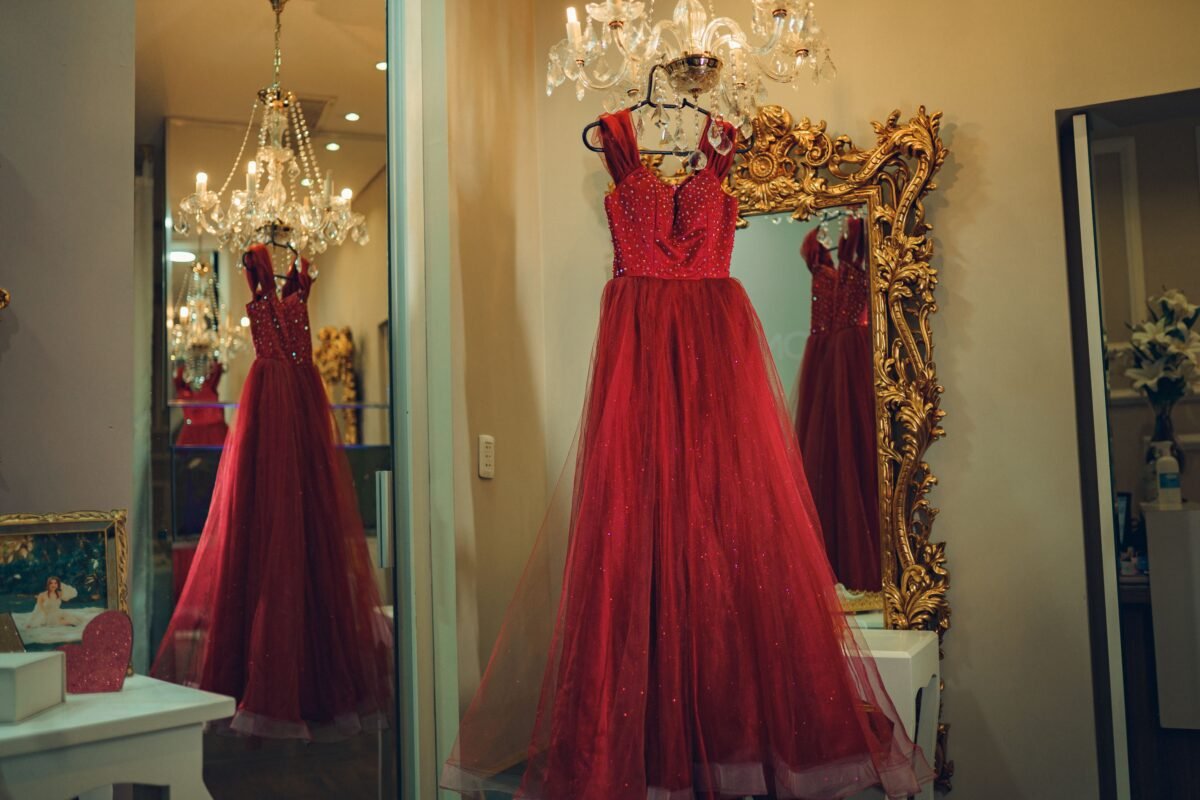
The dress was a royal blue lace bodycon dress with black lace trim, sold by a UK retailer for around 50 pounds, roughly 77 US dollars at the time. what color is the dress It was also sold in other color combinations, such as red, pink and white versions with black lace, but no white and gold version existed .
The photo came from a wedding in Scotland. The bride’s mother, Cecilia Bleasdale, had planned to wear the dress and sent a picture to her daughter. The daughter saw it as white with gold lace, while her mother saw blue with black lace. That small family disagreement became the seed of a global debate.
Physical conditions of the photo mattered, but the dress itself was never ambiguous. Researchers who tested real observers state that the colors most people would see viewing the actual dress are blue and black, what color is the dress and that these colors are no longer perceptually available to the majority of people looking at the photograph .
How One Photo Went Viral in a Single Evening

On the evening of Thursday, 26 February 2015, a Tumblr user posted the picture with a simple plea for help: was the dress white and gold, or blue and black? Friends could not agree, and within hours the question was everywhere. Celebrities weighed in, couples argued, and news sites rushed to explain it. what color is the dress Within a week, the dress had been mentioned in more than ten million tweets .
Traffic numbers show the scale. what color is the dress One news site reported more than 670,000 people viewing a single post at the same time, according to figures cited by a content agency’s retrospective .
Why did it spread so quickly? Commentators pointed to a few simple reasons:
- It was a puzzle with a personal answer. Everyone could look and decide in a second.
- It was low-stakes. Nobody had to take a political side to argue about it.
- It was divisive but friendly. Two clear camps formed, and each was sure of what its own eyes showed.
- It was a mystery science could not explain at first, which invited both jokes and serious investigation.
The virality is only half the story. The more lasting part is the science, which began within days and produced several peer-reviewed studies.
What People Actually See: The Numbers
Early online polls leaned toward white and gold. what color is the dress One widely reported poll of more than 1.2 million readers found about 73 percent choosing white and gold . Open web polls are not controlled samples, however, so their results can differ from scientific surveys.
A later survey by neuroscientist Bevil Conway and colleagues asked about 1,400 participants, including about 300 who had not seen the image before, to describe the colors and match them on a computer palette. The results were reported as follows :
| What viewers reported | Share of participants |
|---|---|
| Blue and black | 57% |
| White and gold | 30% |
| Blue and brown | 11% |
| Something else | 2% |
People seeing the image for the first time reported blue and brown slightly more often than the overall group, and described a wider range of hues, such as tan and bronze. what color is the dress That small group matters, because it hints that perception can shift as viewers settle on one reading of the picture.
The lesson is that there is no single “majority view.” The share seeing each version depends on who is asked and how. What stays constant is that real people, tested carefully, genuinely perceive different colors from the same pixels.
How We See Color: Light, Context and Color Constancy
Color is not a property sitting inside an object. It arises when light hits a surface and reflects into the eye, and the brain then interprets the whole scene. The same banana looks yellow at noon and at sunset, even though the light reaching your eye is very different. The brain separates two things: the color of the light and the color of the surface.
This ability is called color constancy. It lets us treat a white shirt as white in shade, sunlight and lamplight. The brain does this by making assumptions about the light. what color is the dress Usually those assumptions are right, because real scenes carry many clues: shadows, reflections, skin tones, the sky, familiar objects.
The dress photo removes most of those clues. There is little background, no reliable object of known color, and no obvious light source. With the clues gone, the brain has to guess, and different brains guess differently.
Why This Particular Photo Is So Ambiguous
Researchers at Giessen and Bradford, writing in Current Biology, identified three key features of the photograph:
- The camera’s automatic white balance did not match the real lighting. So the picture is not a faithful record of the dress, and the colors most people would see in person are no longer easily available in the image.
- The colors in the dress fall along the daylight locus. This is the set of colors natural daylight takes over a day, from yellowish to bluish. Because the dress colors sit on that same line, the brain struggles to tell whether bluish tones come from the cloth or from the light.
- The brightness pattern matches natural daylight. Yellower light tends to be dimmer and bluer light brighter, and the dress follows that pattern, which makes the confusion stronger.
The bright blue areas could be a dark bluish light shining on a white dress, what color is the dress or a blue dress in neutral bright light. Both readings fit the pixels. The viewer’s brain picks one.
A related point comes from how the image is displayed. Looking at the picture on LCD screens at different angles gives vastly different colors, and screen size adds more variability. what color is the dress Even on the same screen at the same distance, however, people still differ, so the screen alone cannot be the whole story.
What the Science Says: Three Key Studies
Three research efforts did most to explain the dress. Each looked at a different angle, so they complement each other more than they compete.
| Study | Who | Sample | Main finding |
|---|---|---|---|
| Current Biology, 2015 | Conway and colleagues (MIT and Wellesley) | About 1,400 people | People differ in whether they assume cool daylight or warm indoor light; the split showed up as blue and black, white and gold, or blue and brown. |
| Current Biology, 2015 | Gegenfurtner, Bloj and Toscani (Giessen and Bradford) | 15 observers | Perceptions form a continuum, and the groups differ mainly in lightness, not hue. |
| Journal of Vision, 2017 | Pascal Wallisch (NYU) | About 13,000 people | Assumptions about the lighting, especially shadow versus natural or artificial light, were strongly linked to what people saw. |
The MIT and Wellesley Study: Assumptions About the Light
Conway’s team suggested that some viewers assume a cool illuminant, like blue sky, and discount the shorter wavelengths, so they see white and gold. Others assume a warm illuminant, what color is the dress like incandescent light, and discount the longer wavelengths, so they see blue and black. Those who see blue and brown appear to sit somewhere in between.
The team also tried to reconstruct the original lighting and concluded the photo was lit by natural sunlight from a window, mixed with artificial shop lighting . Adding clear lighting clues to altered versions of the image made almost everyone agree on the colors, which supports the idea that lighting uncertainty is the key.
The Giessen and Bradford Study: Lightness, Not Hue
The German and British team asked 15 observers to adjust a colored disc on a calibrated screen until it matched the dress. The results formed a continuous spread, not two clean groups. When only the color quality was compared, the two groups overlapped heavily. When lightness was compared, they separated clearly.
Two extra experiments are worth knowing about. When the dress colors were rotated in color space, none of the observers kept calling it white. They said pink or red, what color is the dress probably because the uncertainty about light and surface disappeared. When the image was turned to grayscale, observers described the dress as light grey or silver, not white.
The NYU Study: Shadows and Daily Light
Pascal Wallisch’s survey of roughly 13,000 people tested a straightforward idea: what people believe about the lighting shapes what they see. Participants who thought the dress was in shadow were far more likely to see white and gold. Among those who saw it in shadow, about four in five reported white and gold, while about half of those who did not see it in shadow did .
The logic runs like this. Shadows tend to be bluish, so a brain that assumes shadow removes some blue, which makes the dress look brighter and golden. A brain that assumes yellowish artificial light removes yellow, and the dress looks blue and black.
Does Your Daily Routine Change What You See?
Wallisch also tested whether the amount of daylight people typically get matters. He compared early risers, called larks, with night owls. The idea was that larks spend more time in daylight, while owls spend more time under warmer artificial light.
His survey found larks were more likely to see white and gold than owls, what color is the dress and the effect grew with how strongly people identified as larks. The effect was described as subtle but statistically reliable. Demographic factors such as age and gender had comparatively small effects in that study .
Earlier reports on the MIT and Wellesley survey mentioned that older people, women and morning people were somewhat more likely to see white and gold. Studies do not fully agree on how big the age and gender effects are, so it is safest to treat them as small tendencies, not rules.
Is It Light Blue or Dark Blue?
The most useful reframing comes from the Giessen and Bradford team. They argue that the question should not be whether the dress is blue or white. It should be whether it is light blue or dark blue.
Their observers behaved consistently. When their color match was above a certain brightness, they called the dress white. Below it, they called it blue. what color is the dress That rules out the idea that people merely use different words for the same color. They really did perceive different brightness levels.
This also explains why nearly everyone can name the lace as either gold or black, yet still disagree about the cloth. The two colors move together depending on which lighting story the brain believes.
Can You Change What You See?
Many people find that their perception flips after looking for a while, and some report switching back and forth. In the MIT and Wellesley survey, a share of respondents described their view changing. A few simple things can influence it:
- Look at different versions of the image. Edited copies with clear lighting cues, such as a background or skin tone showing the light color, tend to make colors clearer for most viewers.
- Change the viewing conditions. A different screen, angle or brightness can shift the colors noticeably.
- Squint or blur. One science commentator reported that squinting can change the image from white and gold to blue and black.
- Look at the real dress. In normal viewing, with full lighting clues, most people see blue and black.
None of these tricks work for everyone, and none prove which version someone “should” see. They simply show that perception depends on the cues available.
Common Myths About the Dress
Myth: One group is simply wrong. The dress was blue and black, so a white and gold answer does not match the dress. But the viewers who saw white and gold were not making an error in reasoning. Their brains made a reasonable guess about ambiguous light.
Myth: It is a sign of colorblindness. The research covered here points to different assumptions about lighting, not to a difference in basic color vision.
Myth: It reveals something about your personality. One researcher quoted in news coverage said that the difference does not say anything significant about people. Sometimes a blue dress is just a blue dress .
Myth: Screens alone explain it. Screens add variation, but people differ even on the same device from the same angle.
Myth: It is only a social media joke. The dress produced several peer-reviewed papers and is still used as a case study in color perception.
What the Dress Taught Scientists
The dress showed that two healthy observers can look at the same image and honestly see different colors. Before it, similar ambiguity in vision was known for shapes, like the classic face-or-vase picture, but a single image producing wholly different colors was new.
Several broader lessons followed:
- Perception is inference. The brain does not just record light. It estimates what is out there.
- Prior assumptions differ between people, and they can be shaped by lifestyle and the light someone usually experiences.
- Ambiguity amplifies differences. In clear scenes people agree. In ambiguous ones, hidden individual differences become visible.
- Color is a joint product of object, light and brain, not a fixed label on an object.
The researchers also stress that questions remain open, including exactly what causes the differences across the population. That is why the dress is still studied.
Frequently Asked Questions
What color is the dress?
The real dress was blue with black lace. The photograph was lit and white-balanced in a way that made many viewers see white and gold. Researchers who tested observers confirm that people viewing the actual dress would mostly see blue and black, while the photo itself is genuinely ambiguous.
Why do some people see white and gold?
Their brains assume the dress sits in bluish shadow or cool daylight and subtract the blue, which makes the cloth look pale and the lace look golden. People who instead assume warm artificial light subtract yellow and see blue and black.
Is the dress blue and black or white and gold?
The dress itself was blue and black. White and gold describes a common perception of the photo, not the garment. Both perceptions are real brain responses, but only blue and black matches the dress as sold.
Who is more likely to see white and gold?
One large survey found people who had more daylight exposure, such as early risers, were somewhat more likely to see white and gold. Age and gender showed small effects. These are tendencies across large groups and cannot predict what any one person sees.
Is seeing white and gold a sign of colorblindness?
No evidence in the studies reviewed here suggests that. The differences were linked to assumptions about lighting, not to a color-vision defect. People with ordinary color vision were found on both sides of the debate.
Why did people disagree so strongly?
Perception feels automatic and certain, so people assumed everyone saw what they saw. The photo lacked lighting clues, which pushed brains toward different interpretations. Because each viewer’s version looked obviously correct, disagreement felt personal, even though it came from a simple difference in guessing the light.
Did scientists ever fully explain it?
They explained a great deal: lighting assumptions, the daylight locus and the photo’s white balance. Researchers still say that exactly why individuals differ in those assumptions is not fully settled, and some sources describe the full explanation as an open question.
Why did the photo look different on different screens?
Screens vary in brightness, color calibration and viewing angle, and LCD panels can show vastly different colors at different angles. Image size also affects what people see. Differences persisted on the same device, so screens add variation without fully explaining it.
Can I make the dress look blue and black?
Try looking at an edited version with clear lighting cues, changing the screen brightness or angle, or viewing the real product images. Results vary. Some people can switch perceptions deliberately, while others cannot, so a failed attempt says nothing about your vision.
Why does the dress still matter to scientists?
It is a rare single image that produces strongly different color perceptions, which makes it a useful test case for how the brain handles uncertainty. It prompted new experiments on lighting assumptions, daylight exposure and color constancy.
Final Thoughts
So, what color is the dress? The dress was blue with black lace. The photo was the problem, and the photo was a very good one for starting an argument.
What makes this story last is not the debate itself but what it exposed. Two people with healthy eyes looked at the same pixels and honestly saw different colors, because their brains made different guesses about the light. Researchers traced those guesses to the photo’s white balance, its daylight-like colors, and each viewer’s assumptions about shadow and everyday lighting. Parts of the picture are still open, including why people hold different assumptions in the first place.
The practical takeaway is simple. Perception is not a perfect camera. It is an estimate, and when a scene gives too few clues, honest estimates can disagree. Next time someone insists they cannot possibly be wrong about what they see, the dress is a friendly reminder that certainty and accuracy are not the same thing.