What Is Couture?
Couture is the art of making clothing by hand, to the measurements of one individual client, through repeated fittings and detailed finishing. The word comes from French and simply means “sewing” or “dressmaking”. In fashion it describes custom-made garments built around a person, not produced in standard sizes.
That short answer is where most articles stop, and it is also where most of the confusion begins. “Couture” is used as a general word for high-end custom dressmaking, as the shortened form of “haute couture” (a legally protected French title), and as a marketing label on clothes that have nothing to do with either. what is couture This guide separates those meanings so you know exactly what is being described when you see the word.
What Does Couture Mean in Fashion?
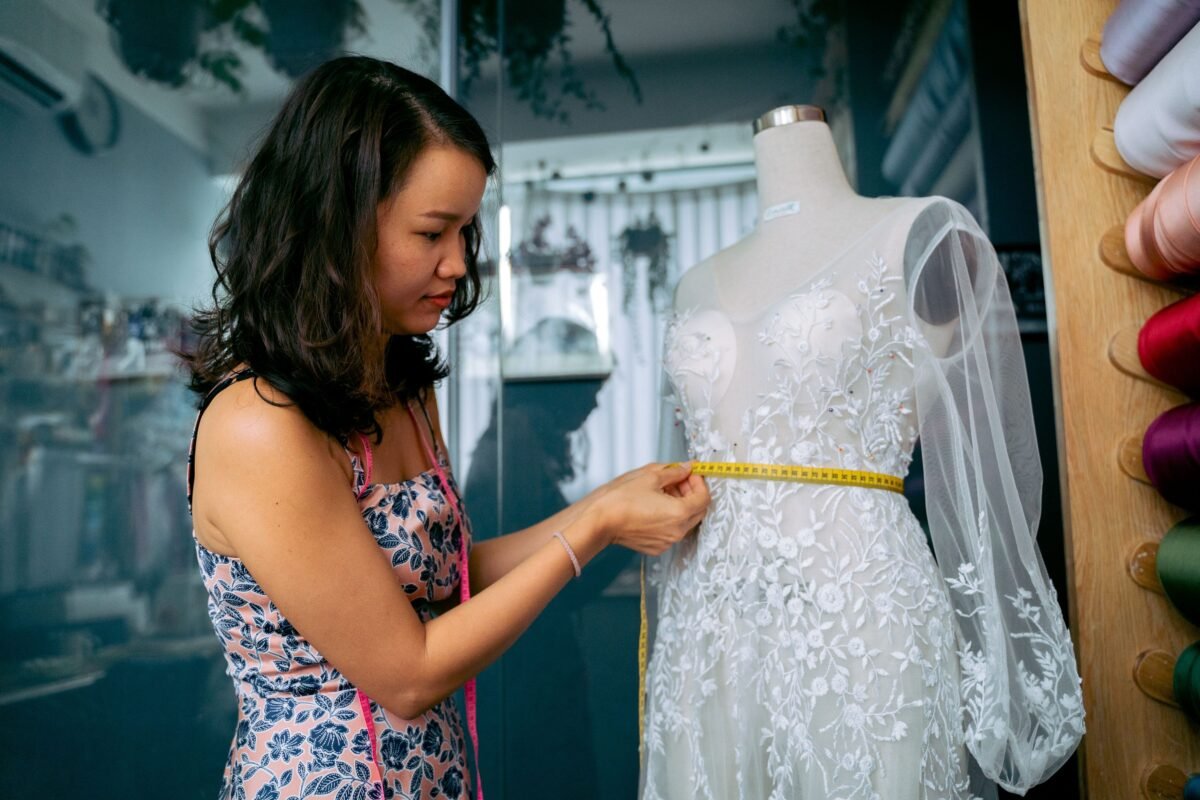
In French, couture means sewing, and a couturier (or couturière) is a person who sews or designs clothing for clients. what is couture The word has been part of Parisian fashion vocabulary for well over a century. Over time, it came to signal a particular way of working: the garment is designed, cut and fitted for one body, and it is made by skilled hands rather than on a production line.
Today the word appears in three different ways, and it helps to keep them apart:
- Couture as a craft. Any dressmaker or atelier that creates fully custom garments, with individual patterns and fittings, is practising couture in the broad sense of the word.
- Haute couture as a protected title. This is a specific, regulated category in France. Only houses accepted by the governing body may use it. It is not a style or a price point, but an official status.
- Couture as a marketing word. Brands use “couture” in product names, collection names and shop signs, often for ready-made clothing. The word may be accurate in spirit or purely decorative.
Understanding which of these meanings applies is the single most useful thing you can learn about the subject. what is couture Most disagreements about “what counts as couture” are really disagreements about which meaning is in play.
What Is Haute Couture?
Haute couture translates literally as “high sewing” or “high dressmaking”. Unlike the general word couture, it is a protected designation. The term has been legally protected in France since 1945, and the Fédération de la Haute Couture et de la Mode (FHCM) decides which houses may use it. what is couture The Fédération’s roots go back to 1868, when the Chambre Syndicale de la Couture Française was founded in Paris to represent the trade.
The criteria are strict, and reports describe them in broadly similar terms:
- Garments are made to order for private clients, with fittings.
- The house keeps a workshop (atelier) in Paris with a minimum number of full-time staff, commonly reported as at least 15 employees, alongside around 20 full-time technical workers.
- The house presents collections to the public in Paris, traditionally twice a year in January and July.
- Historically, each collection has been expected to include around 50 original designs covering day and evening wear.
Two cautions are worth knowing. First, the rules have reportedly been relaxed in recent years as the number of couture ateliers has declined, and the Fédération has shown flexibility on collection size and show frequency. Second, status is not permanent: houses are assessed, newcomers go through a probationary stage, and the official calendar changes over time. what is couture For the current criteria and the current list of member houses, always check the FHCM directly instead of relying on any article, including this one.
The practical point is this: a gown can be extraordinary, what is couture handmade and costly and still not be “haute couture” in the legal sense, because the title belongs to the house and its working structure, not to the quality of any single garment.
Couture vs Haute Couture vs Bespoke vs Made-to-Measure vs Ready-to-Wear
These five terms are often mixed up. The table below shows how they are generally used. Treat the boundaries as guides, since usage varies between countries and brands.
| Term | What it generally means | Who makes the pattern | Fittings | Regulated? |
| Haute couture | Made-to-order garments from a house officially recognised in France | A new pattern for each client | Several are typical | Yes, legally protected title |
| Couture (general) | Fully custom, handmade dressmaking, often from an independent atelier | A new pattern for each client | Usually several | No |
| Bespoke | Entirely custom garment made from scratch (the word is strongly linked to British tailoring) | A new pattern for each client | Usually several | No |
| Made-to-measure | A standard pattern adjusted to your measurements | An existing block, altered | Often one or two | No |
| Ready-to-wear (prêt-à-porter) | Produced in standard sizes in quantity | Graded into a size range | None | No |
A few clarifications make the table more useful.
Couture and bespoke overlap heavily. Bespoke tends to be used for tailoring (suits, coats), while couture is more often used for eveningwear, bridal wear and occasion dresses. Both involve a pattern created from scratch for one person.
Made-to-measure is not the same as couture. Because it begins with an existing pattern and alters it, the result can fit very well, but the process is faster and less individual. what is couture Many reputable businesses offer it, and it is often the sensible choice for people who want a good fit without a full couture process. It simply should not be sold as couture.
Ready-to-wear is not an insult. Luxury ready-to-wear can involve excellent materials and careful construction. The difference is the method: standard sizes and repeated production.
What Makes a Garment Couture?

No single feature makes a garment couture, and not every couture piece uses every technique. Still, certain traits appear again and again. If you want to judge whether something deserves the word, these are the questions to ask.
A pattern drawn for one person
The foundation of couture is a pattern created from the client’s measurements and posture. Two people with the same dress size can have very different shoulders, spine curves, or hip shapes, and a couture pattern accounts for that. what is couture The first version of the garment is often made in plain cotton fabric (called a toile or muslin) so errors can be fixed before the real fabric is cut.
Multiple fittings
Fittings are where couture separates itself from almost everything else. The garment is tried on, adjusted, pinned, re-marked and tried again. Each round refines how the fabric sits, moves and supports the body. what is couture A dress that has only been measured and never fitted on the wearer is made-to-measure at best.
Hand finishing
Many couture garments use hand-sewn techniques in places where a machine would normally be used: hems, linings, buttonholes, zip insertion, and the joining of layers. Hand stitching can be softer and more flexible than machine stitching, and it allows adjustments later. what is couture Machines are not banned in couture, though; many ateliers use them for strong, hidden seams where they make sense. What matters is that the method is chosen for the garment, not for production speed.
Hand embellishment
Beading, sequins, embroidery and appliqué are frequently applied by hand, sometimes by specialist embroidery workshops. what is couture A heavily embellished gown can require a great deal of working time on the decoration alone.
Internal construction
What you cannot see matters. Couture garments often contain structure inside: boning, canvas, interfacing, a built-in foundation layer, weighted hems, and carefully finished seam allowances. what is couture This inner construction is what lets a gown hold its shape and feel secure when worn.
Quality materials
Fabrics are chosen for the design rather than for cost per metre. These may include silk, wool, lace, tulle, or specialist textiles. what is couture Expensive material alone does not make a garment couture, though. A mass-produced dress in silk is still mass-produced.
How Is a Couture Garment Made?
The process varies between ateliers, but the stages below describe how a custom couture commission commonly unfolds. what is couture The timeline depends on the design, the atelier’s workload and the amount of handwork involved, so treat any fixed duration with caution.
- Consultation. The client and designer discuss the occasion, the silhouette, the colours, and practical needs such as comfort, movement and weather. Budget is usually discussed here too.
- Sketches and design development. The designer produces drawings, sometimes with fabric swatches, to agree the direction.
- Fabric selection. Materials are chosen and ordered. Specialist fabrics and trims can take time to source, which may affect the schedule.
- Measurements and pattern. Detailed measurements are taken, often including posture and proportions, and a pattern is drafted for that individual.
- The toile. A trial version is made in inexpensive fabric and fitted on the client. Changes are marked and transferred to the pattern.
- Cutting the final fabric. Only after the toile is right is the real fabric cut. This step is careful because mistakes in expensive cloth are costly.
- Construction and first fitting. The garment is assembled in stages. Early fittings check balance, proportion and comfort.
- Refinement fittings. Further fittings adjust fit and hang. The number needed depends on the garment’s complexity.
- Embellishment and finishing. Embroidery, beading, hems, linings and final details are completed, often by hand.
- Final fitting and delivery. The garment is checked once more, final adjustments are made, and the client is shown how to wear and care for it.
At the top end of the industry, reports describe a single haute couture dress taking a month or more to complete and representing more than 1,000 hours of work in some cases, with several craftspeople working on one garment. what is couture Those figures describe elaborate pieces at the highest level, not every custom commission. A simpler custom dress from an independent dressmaker can take far less time.
Why Is Couture So Expensive?
Couture is costly for reasons that are mostly about time and skill, not branding alone. what is coutureRather than quote prices that vary hugely by designer, country and design, here are the factors that drive cost:
- Labour. Skilled hand sewing and pattern making take years to learn. The hours involved are often the largest part of the price.
- Specialist skills. Embroiderers, feather workers, pleaters and tailors may each contribute to one garment.
- Materials. Fine fabrics, laces and trims cost more, and cutting for a single garment can mean unusual waste.
- Fitting time. Every fitting uses the time of both the client and the atelier, and the design may be adjusted several times.
- Complexity. Structure, layering and decoration multiply the work.
- Exclusivity and overheads. An atelier has to cover its premises, staff and design costs from a small number of commissions.
One important caution: high price does not automatically prove quality, and low price does not automatically mean poor craft. A garment should be judged by its construction, fit and finish. what is couture Some luxury houses also run couture mainly for prestige, with their ready-to-wear and accessories carrying the commercial weight. Couture’s value to a brand is often reputational as much as financial.
Who Buys or Wears Couture?
The client base is smaller and more varied than people expect.
- Private clients. People who commission garments for major events and have the means to do so.
- Brides. Bridal gowns are among the most common custom commissions, because fit, comfort and a personal design carry so much weight on the day.
- Formal occasion wearers. Galas, award ceremonies, state events and cultural celebrations often call for one-of-a-kind outfits.
- Public figures. Actors, musicians and other public personalities sometimes wear couture on red carpets, which gives the designs visibility far beyond the client list.
- Collectors and institutions. Some pieces are acquired for private collections or museums as examples of craft and design history.
Not everyone who wears a couture-style look is a couture client. what is couture Many people experience couture through photos, exhibitions and borrowed or rented pieces, and its influence also reaches the wider fashion industry through shapes, techniques and ideas that later appear in mainstream collections.
What Is Couture-Inspired Fashion?
“Couture-inspired” describes clothing that borrows the look of couture (dramatic silhouettes, rich fabrics, embellishment) without being made through the couture process. what is couture Many boutiques and brands use the phrase honestly to describe elevated ready-to-wear or limited-run pieces.
The distinction matters when you shop:
- Couture-inspired usually means the design takes cues from couture but is produced in set sizes or small batches.
- Custom or made-to-order means the garment is made after you order it, possibly to your measurements, which may or may not involve a new pattern.
- Haute couture means a house with official recognition, producing under the Fédération’s rules.
None of these is automatically better or worse for you. A well-made couture-inspired dress may suit a budget and a deadline far better than a commission. what is couture The problem arises only when the label promises more than the garment delivers.
How to Tell Whether a Garment Really Reflects Couture-Level Craft
If you are examining a dress in a shop, or reviewing a quote from an atelier, these checks help you judge the work. Remember that you are looking for evidence of care, not a guarantee.
- Ask how the pattern was made. A genuine custom commission begins with your measurements and a pattern for you. If the answer is “we adjust a standard size,” that is made-to-measure.
- Ask about fittings. Find out how many are included and when they happen. A serious process has several.
- Look at the inside. Seams should be neat, edges finished, linings secure, and structure present where the design needs it.
- Check the hem and closures. Hems should hang evenly and closures should lie flat.
- Inspect the embellishment. Beads and embroidery should be secure and evenly placed, with clean back-of-work.
- Test comfort. Sit, raise your arms, and walk. A well-fitted couture garment should allow ordinary movement.
- Get the terms in writing. Pricing, timeline, alteration policy and what happens if the fit isn’t right should all be clear before you commit.
- Be wary of vague claims. “Couture quality” with no detail about method is a marketing phrase, not evidence.
Common Myths About Couture
“Couture just means expensive.” Price is a consequence of the process, not the definition. Expensive clothing can be mass-produced, and skilled custom work can sometimes cost less than a luxury brand’s off-the-rack pieces.
“Couture means everything is sewn by hand.” Hand work is central, but ateliers also use machines where they suit the job. The deciding factor is skilled, deliberate construction.
“Only Paris can produce couture.” The legal title of haute couture requires a Paris atelier, but skilled couture-style dressmaking happens in many countries. Talent is not limited by geography; only the protected title is.
“Any designer’s dress can be called haute couture.” In France, no. The term is protected, and houses must be approved. Press and retailers sometimes use it loosely, so it is worth checking.
“Couture is only for royalty and celebrities.” Most custom dressmaking serves ordinary clients marking weddings, graduations and other milestones, often at a wide range of budgets.
“Couture is outdated.” Official haute couture is small, but its techniques, ideas and craftsmanship continue to influence fashion, and interest in made-to-order and repair-friendly clothing has grown among people who want pieces built to last.
A Short History of Couture
The idea of a named designer making clothes for private clients took hold in nineteenth-century Paris. Charles Frederick Worth, an English designer working in Paris, is widely credited with changing the model: he showed designs on live models and let clients choose from his collections, rather than simply following their instructions. what is couture Earlier figures such as Rose Bertin, who dressed the French court, had already shown that a dressmaker could become a celebrated name.
The Chambre Syndicale de la Couture Française was established in 1868 to represent the trade, and the title “haute couture” was later given legal protection in 1945. For much of the twentieth century, Paris houses defined elegant dress, and their seasonal collections set the direction for the wider industry.
As ready-to-wear grew and tastes changed, the number of couture clients and houses fell. what is couture Many houses now treat couture as a showcase for creativity and craft, while the Fédération has adapted by welcoming guest and foreign members and acknowledging new techniques, including innovative methods used by some contemporary designers. The tradition continues, but in a smaller and more international form than in its peak years.
Couture and Sustainability: A Careful Perspective
Couture is sometimes described as sustainable because garments are made one at a time and designed to last. what is couture There is truth in that: made-to-order production avoids overproduction, and well-constructed garments can be altered, repaired and worn for many years. The inner structure also makes repairs easier.
But it is not automatically sustainable. Materials, embellishments, transport and the number of garments a client commissions all affect the environmental picture. what is couture Be cautious of any brand that uses “couture” and “sustainable” as interchangeable terms without explaining how. Ask about fabric sources, waste handling and repair services if this matters to you.
Frequently Asked Questions About Couture
What is couture in simple words?
Couture is custom dressmaking: a garment designed, cut and fitted for one person, usually with skilled hand finishing. The word comes from the French for “sewing”.
What is the difference between couture and haute couture?
Couture is the broad craft of custom, high-quality dressmaking. Haute couture is a legally protected French title given only to houses approved by the Fédération de la Haute Couture et de la Mode under strict criteria.
Is couture the same as bespoke?
They overlap. Both involve a pattern made from scratch for one client. Bespoke is more commonly used for tailoring, while couture is more often used for eveningwear, bridal and occasion pieces.
Is made-to-measure the same as couture?
No. Made-to-measure adjusts an existing pattern to your measurements. Couture usually begins with a new pattern and involves more fittings.
What makes a dress couture?
Typically a pattern made for one person, multiple fittings, quality materials, careful inner construction and a high level of hand finishing. No single feature defines it, so look at the whole process.
How is couture clothing made?
Through consultation, design, fabric selection, a pattern, a trial garment (toile), fittings, construction, embellishment and a final fitting. The detailed process varies between ateliers.
How many fittings does a couture dress need?
It depends on the design and the atelier. Complex garments tend to need more, and many couture processes include several fittings before delivery.
Why is haute couture expensive?
Because of skilled labour, specialist techniques, fine materials, extensive fitting time and the small scale of production. Price alone is not proof of quality.
Can anyone call their clothing couture?
The general word “couture” is widely used and not regulated, so many brands use it. “Haute couture” is legally protected in France and may only be used by approved houses.
What is couture-inspired fashion?
Clothing that takes design cues from couture, such as dramatic silhouettes or rich embellishment, but is not made through the full custom couture process.
Final Thoughts
Couture, at its heart, is a relationship between a person and a garment made for them. It is defined by method, meaning custom patterns, careful fitting and skilled hand work, rather than by a price tag or a fashionable label. Haute couture is a narrower, legally protected category within that world, belonging to houses approved in Paris.
When you next see the word, ask two questions: which meaning of “couture” is this, and what process stands behind it? The answers will tell you far more than the label does.