Is a Backpack a Personal Item? Airline Size Rules, Fare Limits and Best Tips for 2026


Yes, a backpack is a personal item on almost every airline, as long as it fits under the seat in front of you and meets that airline’s size limit. The catch is that “fits under the seat” is not one universal size. United’s limit is much narrower than American’s, Ryanair’s is smaller than easyJet’s, and some airlines publish no dimensions at all. Your fare type matters too, because a cheap ticket can mean the personal item is the only free bag you get.
This guide explains exactly when a backpack counts as a personal item, how to measure yours properly, what the limits are on major airlines (with the date we last checked them), what happens if your bag is too big, and how to choose and pack a backpack so you are not stopped at the gate.
What Is a Personal Item on a Flight?

A personal item is the smaller of the two bags most passengers can bring into the cabin. is a backpack a personal item It is meant to go under the seat in front of you, so it is available during the flight, and it is usually free. Typical examples include:
- A small or medium backpack
- A purse or handbag
- A laptop bag or briefcase
- A small duffel or tote
The other cabin bag is the carry-on, which is larger and normally goes in the overhead bin. Airlines are not always consistent in how they write their rules, so here is the practical way to think about it:
| Bag type | Where it goes | Typical size | Usually included in the fare? |
|---|---|---|---|
| Personal item | Under the seat in front | Small (varies by airline) | Yes, on most airlines |
| Carry-on bag | Overhead bin | Larger (often about 22 x 14 x 9 in in the US) | Depends on airline and fare |
| Checked bag | Cargo hold | Much larger, weight-limited | Often paid |
Is a Backpack a Personal Item on Every Airline?
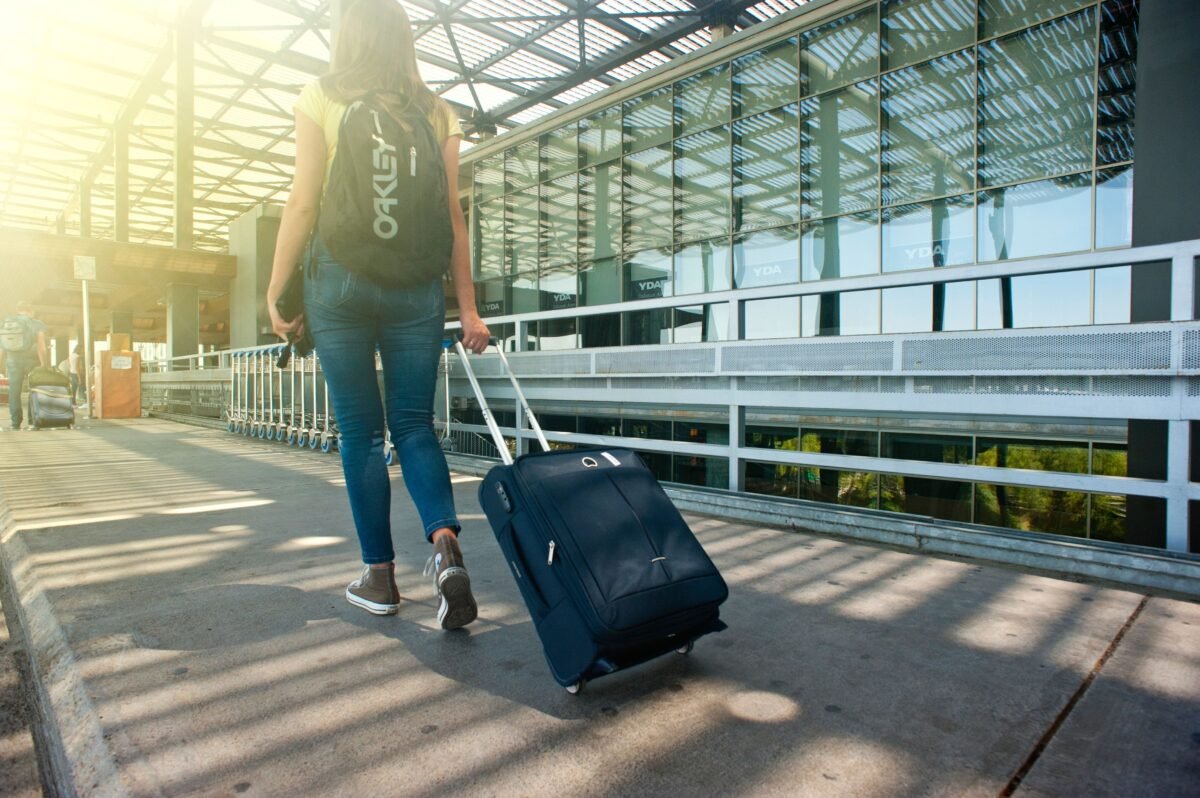
In almost all cases, yes. Airlines define a personal item by where it goes and how big it is, is a backpack a personal item not by what it looks like. A backpack that fits under the seat qualifies. A backpack that is too big, too stuffed, or too rigid may be treated as a carry-on instead, and that can mean a fee.
There are three situations to watch for:
- The backpack exceeds the airline’s published size. It will be judged a carry-on and may be charged or gate-checked.
- The airline publishes no size. Southwest and Delta, for example, say the item must fit under the seat, rather than giving fixed dimensions. In that case the real test is the space under the seat, which can vary by aircraft.
- Your fare does not include a carry-on. If you are on a basic or ultra-low-cost fare, your backpack may be your only free bag, so a second bag would cost extra.
One more point of honesty: you will read many traveler stories saying “nobody ever measured my bag.” That is personal experience, not a rule. is a backpack a personal item Enforcement depends on the airline, the airport, how full the flight is and even the individual gate agent. The only safe plan is to meet the published rule.
Personal Item vs Carry-On: What Is the Difference?

People often mix these up, and the confusion is where most gate fees start.
- A personal item is the small bag that goes under the seat. It is the one most airlines let you bring even on their cheapest fare.
- A carry-on is the larger bag that goes overhead. On some fares (such as basic economy or ultra-low-cost tickets) it costs extra or is not included.
- A backpack can be either, depending on its size. A small daypack is a personal item. A large 40-liter travel pack is a carry-on, and on a tight fare it may not be allowed in the cabin without a fee.
So when someone asks, “is a backpack a personal item or a carry-on?”, is a backpack a personal item the honest answer is: it depends on the backpack and the airline. Measure it and compare it against your airline’s limit.
What Size Backpack Fits Under an Airplane Seat?
There is no single answer, but you can work with these guidelines.
- Many US airlines cluster around 18 x 14 x 8 inches (about 45 x 35 x 20 cm).
- Some airlines are tighter. United’s 17 x 10 x 9 inches is a common tight limit, and the 10-inch width is the part that catches people out.
- European budget airlines are often smaller still, around 40 x 30 x 20 cm (about 15.7 x 11.8 x 7.9 inches).
- Volume is a rough guide too. A backpack of about 20 to 25 liters tends to fit the tightest limits, and about 28 to 33 liters often fits the most generous ones, though shape matters as much as liters.
The safest strategy: if you fly several different airlines, buy and pack to the smallest limit you expect to face. is a backpack a personal item A soft, compressible backpack of around 17 x 10 x 9 inches or smaller will fit almost anywhere. If you only fly one airline, size to that airline’s rule.
How to Measure a Packed Backpack Correctly
A backpack’s size on the product page is not its size when it is full. Here is how to check it properly:
- Pack it as you will actually travel. Put in everything you plan to carry.
- Zip everything and fill the outer pockets, since bulging pockets make the bag wider and deeper.
- Measure height, width and depth at the widest points, including handles, side pockets, straps and anything attached.
- Compare with the airline’s published limit, and remember airlines usually count handles, wheels and external pockets in the measurement.
- Test it in a sizer. is a backpack a personal item Some airlines and airports have a measuring frame near the gate or check-in. Gently pressing the bag into it shows whether a soft bag can squeeze in.
- Try the under-seat test at home by sliding it under a chair or sofa to see how much space it really takes.
Do Handles, Pockets and Straps Count?
Usually yes. Airlines often say size includes handles, wheels and attachments. A backpack with bulky shoulder straps, a water bottle sleeve stuffed with a bottle, or a sleeping pad strapped to the outside can push it over the limit. Compress or remove external items before you go to the gate.
Personal Item Size Limits by Airline (Checked November 16, 2026)
The tables below summarize published limits as reported in current 2026 airline guides and travel references. Treat them as a guide, not a guarantee. Always check your airline’s official page before flying, is a backpack a personal item and re-check after any change to your fare, itinerary or operating airline.
US Airlines
| Airline | Personal item size | Notes |
|---|---|---|
| American Airlines | 18 x 14 x 8 in (45 x 35 x 20 cm) | One of the larger published limits among major US carriers |
| Delta Air Lines | No fixed size published | Must fit under the seat; treat about 17 x 13 x 8 in as a safe working size |
| United Airlines | 17 x 10 x 9 in (43 x 25 x 22 cm) | Narrowest of the big three; basic economy on most domestic routes gives you the personal item only |
| Southwest Airlines | No fixed size published | Must fit under the seat; the carry-on limit is 24 x 16 x 10 in |
| JetBlue | About 17 x 13 x 8 in | Check your fare type |
| Frontier Airlines | 18 x 14 x 8 in | Weight limit of 35 lb reported; the free bag is the personal item, larger carry-ons cost extra |
| Allegiant | 18 x 14 x 8 in | Carry-on bag fees apply on many fares |
A note on Spirit Airlines: is a backpack a personal item several 2026 travel references report that Spirit stopped operating in May 2026. If you hold an old Spirit ticket, check its status directly. Its former 18 x 14 x 8 inch limit lives on at other budget carriers.
Canada, Europe and Budget Airlines Abroad
| Airline | Free personal item size | Notes |
|---|---|---|
| Ryanair | About 40 x 30 x 20 cm | The free bag on a standard fare. Reported in 2026 as increased from an older, smaller limit, and enforced with gate sizers. A larger cabin bag requires a paid option |
| easyJet | 45 x 36 x 20 cm | Includes handles and wheels; a larger cabin bag costs extra on some fares |
| Wizz Air | About 40 x 30 x 20 cm | A weight limit (around 10 kg) is reported; larger cabin bags are paid |
| British Airways and Jet2 | About 40 x 30 x 15 cm (BA), 40 x 30 x 20 cm (Jet2) | A larger cabin bag is also included on many fares |
| Lufthansa and other full-service European carriers | Often about 40 x 30 x 15 cm or smaller | Rules vary by fare and route |
| Air Canada, WestJet | Commonly around 43 x 33 x 16 cm (Air Canada) | Verify on the airline’s site for your fare |
European rules are also changing. In 2026 the European Parliament voted on measures about personal items and small cabin bags, but the final text reportedly focuses on how fares must be displayed rather than forcing a free cabin bag on every ticket. So do not assume a rule has changed for your booking, and check the airline’s page.
Why the Numbers Differ So Much
Airlines design their rules around their aircraft, their business model and their fare structure. A legacy airline with larger planes can offer more under-seat space. is a backpack a personal item A low-cost airline using high-density cabins keeps the free bag small and sells upgrades. That is why a backpack that is fine on American can be rejected on United, and a bag that works on easyJet can fail on Ryanair.
Basic Economy and Budget Fares: Will Your Backpack Be Your Only Free Bag?
This is the area where many travelers get caught. The personal item is usually free on every fare, but the carry-on is not.
- United Basic Economy: On most domestic routes, you receive the personal item only. A full-size carry-on is not included, though some international routes are an exception. Compare the basic fare with standard economy before you book.
- American and Delta: Basic fares have historically included a carry-on, is a backpack a personal item but policies can change, and some references disagree. Confirm on the airline’s page for your exact fare.
- Frontier and other ultra-low-cost carriers: The personal item is the free bag. Carry-on bags are paid add-ons, and fees are often cheaper when you buy them at booking rather than at the airport.
- Ryanair, Wizz Air and similar European carriers: The free item is a small under-seat bag. Larger cabin bags generally require a priority or paid option.
Tip: On a basic fare, treat your backpack as your entire carry-on allowance. Pack it to the airline’s under-seat size, not the carry-on size.
Can You Bring a Backpack and a Carry-On Bag?
On most airlines, yes, if both are within the limits and your fare includes a carry-on. The backpack goes under the seat as your personal item, and the roller or larger bag goes overhead. Some examples:
- A small backpack plus a wheeled carry-on is a common combination on American, Delta, United (on fares that include a carry-on), Southwest and JetBlue.
- On basic fares and budget airlines, you may only be allowed the backpack.
- Airlines generally allow one personal item, is a backpack a personal item not two. A backpack plus a separate purse or laptop bag can be treated as two items. If you want to use both, put the purse inside the backpack, or check the airline’s rule on whether small accessories are exempt.
What Is Not Counted Against Your Allowance?
Many airlines exempt certain items, but the list differs. Common exemptions include a small coat or jacket, a diaper bag for a traveling infant, a medical device such as a CPAP machine, is a backpack a personal item a mobility aid, and items bought in the airport duty-free shop. Never assume. Check the airline’s “special items” or “exceptions” section for your itinerary.
What Happens If Your Backpack Is Too Big?
If the airline decides your personal item is too large, you might face one of these outcomes:
- A gate fee to carry it as a larger cabin bag, which is often more expensive than paying in advance
- Forced gate-check into the cargo hold, sometimes with a fee and sometimes free on full flights
- A request to repack into a smaller bag or remove items
- Denial of overhead space if you are on a fare that does not include a carry-on
Fees vary widely by airline, route and when you pay. The most reliable way to avoid them is to measure your bag in advance, pack to the smallest limit you expect, and buy extra cabin baggage at booking if you really need it.
Do Airlines Weigh Personal Items?
Most major US airlines do not publish a weight limit for personal items, but some budget and international carriers do. For example, Frontier reports a 35-pound cap, is a backpack a personal item and some European budget airlines cap their small bag around 10 kg. A heavy backpack may also be refused on safety grounds, because you need to lift it and slide it under the seat. If you will be carrying camera gear, laptops and chargers, check the weight rules as well as the size.
How to Choose a Backpack That Works as a Personal Item
You do not need a special “airline-approved” bag. You need a bag that fits the smallest limit you will face. Look for:
- A soft-sided or lightly structured body. Soft bags compress into sizers and under seats. Rigid, boxy frames cannot bend.
- Size around 17 x 10 x 9 inches or smaller if you fly many airlines. If you fly only airlines with a larger limit, you can go up to 18 x 14 x 8 inches.
- A capacity of about 20 to 25 liters for the tightest rules, or up to about 30 liters for generous ones.
- Compression straps to pull the bag tighter when it is only partly full.
- Minimal external pockets, since they add depth and width when stuffed.
- Low weight when empty, so more of your allowance goes to your belongings.
- Easy laptop and liquids access, because you will take items out at security.
- Comfortable straps, especially if you will wear it through long connections.
Be cautious of marketing claims. A product listing may say “fits under the seat” or “personal item size,” but that statement is not a guarantee. Measure it against your airline’s number.
How to Pack a Backpack to Stay Within the Limit
- Pack heavy items near your back and flat items at the front so the bag keeps a slim profile.
- Wear your bulkiest layers on the plane instead of packing them.
- Use packing cubes or compression bags to flatten clothing.
- Roll, don’t fold, soft items to save space.
- Keep your essentials in a small organizer for quick access to passport, phone, medication and chargers.
- Leave the outside clean. Move bottles, sleeping pads and bulky items inside, or into your other bag.
- Do a final measurement at home after packing, not before.
Don’t Mix Up Baggage Rules and Security Rules
Size and fees are set by the airline. Security rules, such as the limits on liquids in carry-on bags, are set by the airport or government security agency, and they are separate. A backpack can meet your airline’s size rule and still have items removed at security. Check your departure country’s security guidance, and pack liquids, batteries and sharp items accordingly.
International Flights and Connecting Itineraries
If your trip includes more than one airline, the strictest rule usually becomes your rule. A flight booked with one airline but operated by another is governed by the operating carrier’s baggage policy, and the same is often true for partner flights and codeshares. Budget airlines on a connecting leg may also be stricter than the long-haul carrier. When in doubt, pack for the smallest limit in the journey, and check each segment’s rules.
Personal Item Backpack Checklist (Save or Screenshot)
- Find the operating airline and fare type on your booking.
- Open the airline’s official baggage page and note the personal item size and weight rule.
- Measure the packed bag, including handles and pockets.
- Compare it to the smallest limit on your itinerary.
- Make sure the bag can slide under a seat and still leave room for your feet.
- Remove external attachments and flatten stuffed pockets.
- Keep only one personal item unless the airline allows more.
- Pack liquids and electronics according to airport security rules.
- Re-check the policy a few days before you fly.
Frequently Asked Questions
Does a backpack count as a personal item?
Yes, on most airlines. A backpack counts as a personal item when it fits under the seat in front of you and meets the airline’s size limit. If it is larger, it may be treated as a carry-on and could cost extra.
Is a backpack a personal item or a carry-on?
It depends on size. A small daypack is a personal item. A larger travel backpack is usually a carry-on. Measure the packed bag and compare it to your airline’s limits.
Can a 30L backpack be a personal item?
Sometimes. A 30-liter backpack may fit airlines with generous limits such as 18 x 14 x 8 inches, but it may be too big for tighter limits like United’s 17 x 10 x 9 inches or many European budget airlines. Volume is only a rough guide, so measure the packed dimensions.
Can I bring a backpack and a carry-on?
Yes, on many airlines when your fare includes a carry-on. The backpack is the personal item and the larger bag goes overhead. On basic fares and budget airlines, you may only be allowed the backpack.
Can I bring a purse and a backpack?
Usually the airline allows one personal item, so a purse and a backpack together can count as two. To avoid trouble, put the purse inside the backpack or check whether the airline lets you carry small accessories separately.
Does basic economy include a personal item?
On most airlines, yes. The personal item is typically free on every fare, but a carry-on may not be included on basic fares. This differs by airline, so check your exact fare.
Final Thoughts: Measure First, Then Pack
So, is a backpack a personal item? Yes, as long as it fits the airline’s under-seat rule for your fare. The mistakes that cost travelers money are not about the question itself, but about the details: packing to the wrong size, ignoring basic fare limits, trusting a story instead of the written policy, or forgetting that the operating airline decides.
The formula is simple. Check your airline’s official page, measure your packed bag with its handles and pockets, pack to the smallest limit on your trip, and keep one slim, soft backpack that slides under any seat. Do that and you can usually skip the gate fees and walk onto the plane with your bag at your feet.